 How-to
5 Things to Pack for a Family Camping Trip Before You Leave
Quick Summary
A family camping trip needs five core categories: shelter, sleep, cooking, clothing and light. Start with a tent sized for one more person than your family, sleeping bags and pads, a camp stove and cooler, layered clothing, and headlamps. Count shared gear once and personal gear per person.
- Choose a tent rated for at least one more person than your family count.
- Count shared gear like the stove, cooler and first-aid kit once for the whole family.
- Add a 20 percent buffer to food, fuel and batteries.
- Pack a portable crib or playpen for babies and keep it away from the campfire.
- Pack out all diapers and wipes if the campground has no trash service.
Table of Contents
- Start With the 5 Most Important Things to Bring Camping
- Building a Camping List for a Family of 4
- Shelter, Sleep and Ground Protection
- Kitchen, Food and Water Storage
- Clothing, Lighting and Sun Protection
- Camping With Kids Checklist: Packing for Babies, Toddlers and Older Children
- Get the Family Camping Checklist PDF and Plan Your Next Trip
- Frequently Asked Questions
Start With the 5 Most Important Things to Bring Camping
Last Updated: November 5, 2026
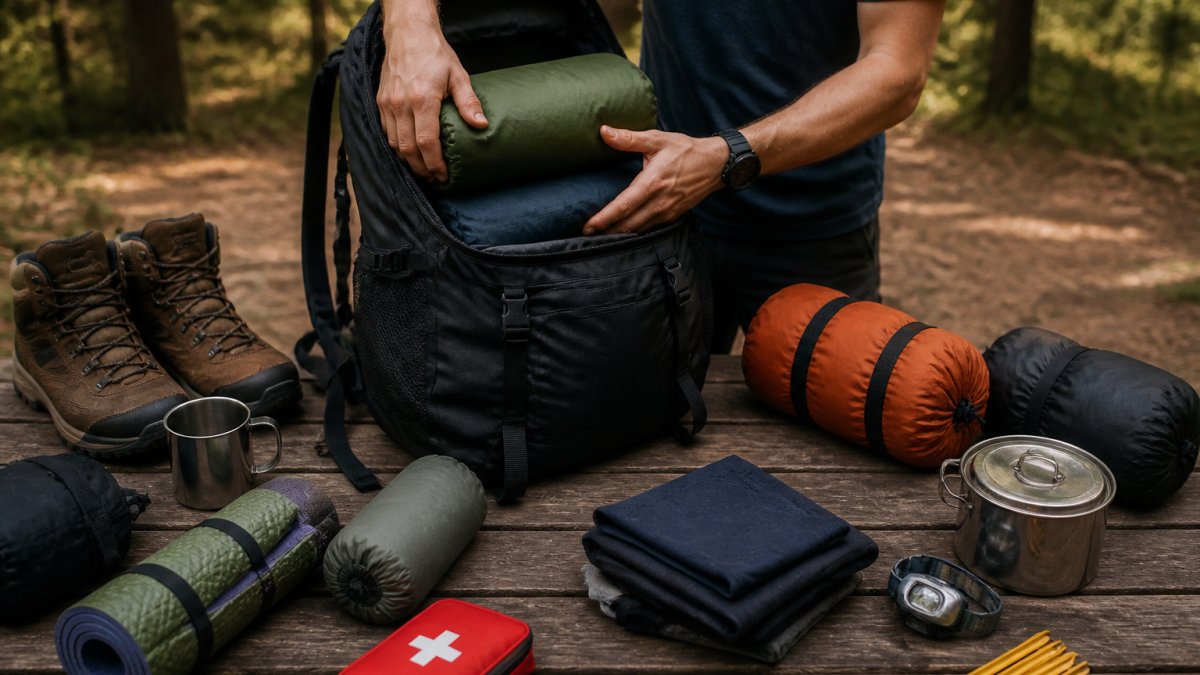
This checklist is built around the gear that matters most when you're camping with the whole family. Packing for a family camping trip can feel overwhelming, but most of it comes down to five things: shelter, sleep, cooking, clothing and light. Get those right and everything else falls into place.
Start here before you fill the car. These five categories make up the core of any family camping list, and they're the first things you'll reach for at night and in bad weather.
- Shelter: a tent sized for everyone, plus a rain fly and stakes
- Sleep: sleeping bags, pads or air mattresses, and pillows
- Cooking: a camp stove, cookware, utensils and a cooler
- Clothing: layers, rain gear and sturdy footwear
- Light: headlamps, flashlights and spare batteries
Watch out: Pack a little more batteries and fuel than you think you'll need. Running out of light or a stove on night two is the most common frustration we hear about.
Building a Camping List for a Family of 4
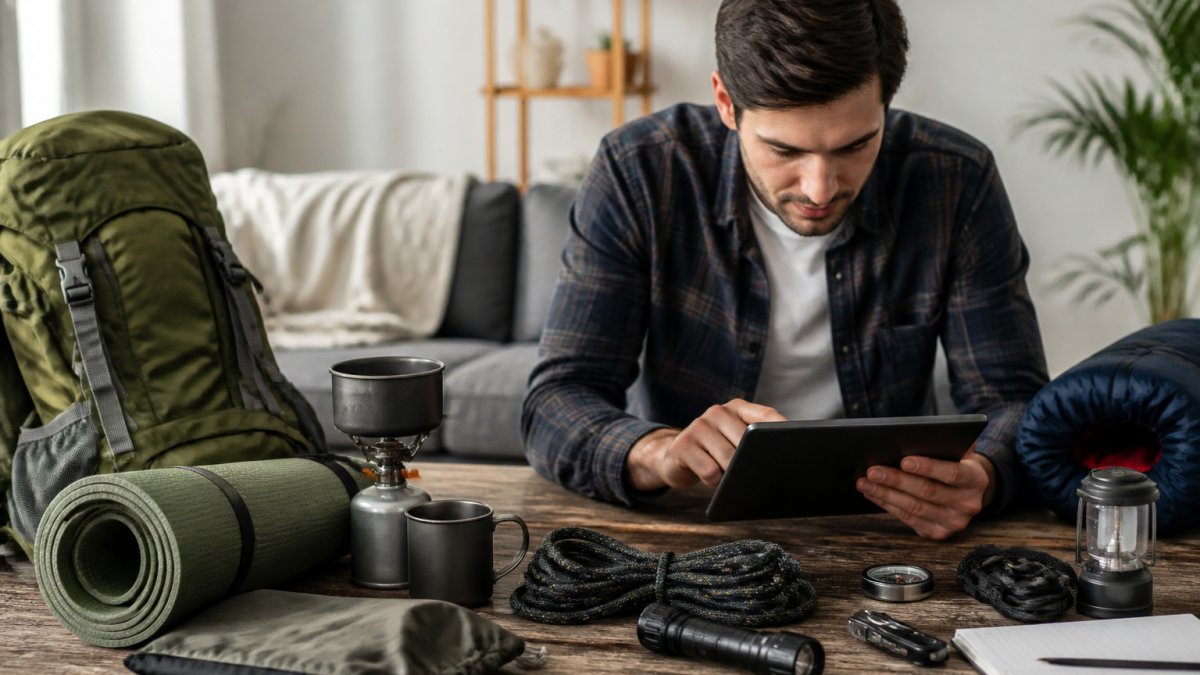
A family of four needs more of everything, but you don't need four copies of every item. The trick is separating shared gear from personal gear and then scaling by trip length and season. Most families overpack on clothes and underpack on lighting and water. Here's how to get the quantities right.
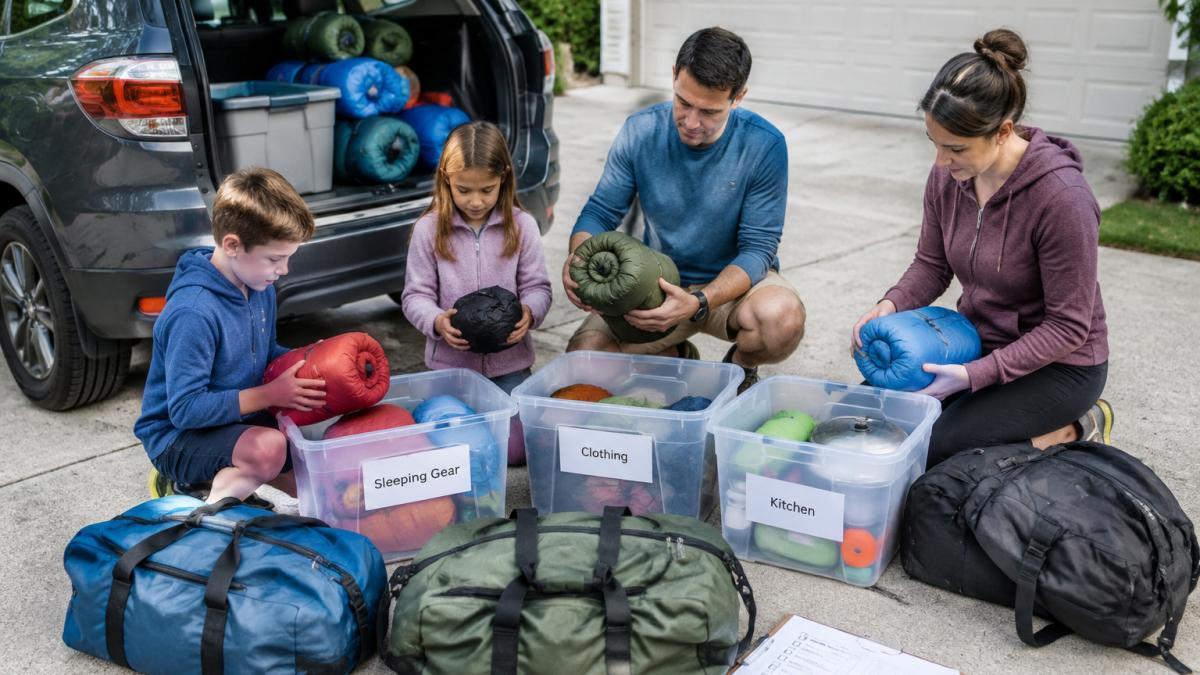
Start with a simple rule: count shared gear once, count personal gear per person, and add a 20 percent buffer on consumables like food, fuel, and batteries. That buffer covers kids eating more outdoors and the extra stove fuel you burn on a cold morning.
Shared gear (count once):
- Tent sized for at least five people (one more than your family count)
- Camp stove and fuel (one two-burner stove is enough for four)
- Cooler (a 50-quart cooler handles food for a family of four for a weekend)
- Lantern (one for the picnic table)
- First-aid kit (one well-stocked kit, not four small ones)
- Pot, pan, and cooking utensils (one set)
- Water container (a 5-gallon collapsible container covers drinking and washing for a weekend)
- Tarp or footprint
- Mallet and spare stakes
Personal gear (count per person):
- Sleeping bag rated for the expected low temperature
- Sleeping pad or air mattress (plus a pump for air mattresses)
- Pillow
- Headlamp with spare batteries
- Two sets of clothing minimum (one worn, one dry)
- Rain jacket
- Sturdy closed-toe shoes plus camp sandals
- Toothbrush and toiletries
- Sunscreen and insect repellent (one bottle per person avoids sharing delays)
Trip length adjustments:
- Weekend (2 nights): Two days of clothing per person, one cooler with ice packs, one water container. No laundry plan needed.
- Three to four nights: Add one extra set of clothing per person, a second cooler or a larger one, and a plan for recharging headlamp batteries (bring spare batteries or a power bank).
- Five nights or more: Plan for laundry (a dry bag and biodegradable soap) or pack a full week of clothes. Bring a second water container and a backup stove fuel canister. Consider a second lantern for the tent area.
Season adjustments:
- Cold weather: Add a sleeping pad with a higher R-value (R-4 or above), a warmer sleeping bag, extra fuel for the stove, and a hat and gloves for each person. Cold nights burn through fuel faster.
- Hot weather: Add extra water (one gallon per person per day is a common baseline), a shade tarp or canopy, and electrolyte packets. Skip the heavy sleeping bags and bring lightweight blankets or quilts.
- Rainy forecast: Add a second tarp for a dry zone, rain pants, and a pack cover or dry bags for clothes. Keep a spare set of dry clothes in the car.
Watch out: Don't pack four of everything. Four camp chairs are fine, but four lanterns, four coolers, and four first-aid kits waste space and weight. Count shared gear once and use the saved room for extra water and fuel.
Print a checklist and check items off as they go into the car. Label bins by category (sleep, kitchen, clothes, kids) so unloading at the campsite is faster.
Shelter, Sleep and Ground Protection
Your tent is the foundation of the trip. Choose one rated for at least one more person than you have, so there's room for gear and for kids who sprawl. A tent with a full rain fly and sturdy stakes handles most weather a family will see.
Put a footprint or tarp under the tent to protect the floor from rocks and moisture (Finding and Setting Up a Campsite). Keep stakes and a mallet in a separate bag so they're easy to find at setup.
For sleep, a sleeping pad matters as much as the bag. Ground cold gets through a bag fast. Air mattresses are comfortable, but bring a pump or a hand-pump backup. Pillows are small luxuries that make a big difference for kids.
- Tent with rain fly and footprint
- Stakes, guy lines and a mallet
- Sleeping bag rated for the coldest night expected
- Sleeping pad or air mattress with a pump
- Camp pillows for each person
Kitchen, Food and Water Storage
Cooking at camp is simpler when you plan meals in advance. Pick three or four meals you can repeat, and pack ingredients for each one. Pre-chop vegetables at home and store them in sealed bags.
Bring a cooler with ice packs for perishable food, and keep raw meat on the bottom. A collapsible water container covers drinking and washing. Bring extra water even if the campsite has a tap.
- Camp stove, fuel and a lighter or matches
- Pot, pan, plates, bowls and utensils for everyone
- Cooler with ice packs for perishable food
- Dry food in sealed containers, labeled by meal
- Collapsible water container, plus a spare jug for emergencies
- Biodegradable soap, a sponge and a dish towel
Clothing, Lighting and Sun Protection
Weather changes fast outdoors, so dress in layers. Pack a base layer, a fleece or warm mid-layer and a rain jacket for each person. Cotton holds moisture and gets cold, so choose synthetic or wool layers when you can.
Good lighting keeps kids safe after dark. A headlamp for each person leaves hands free. Add a lantern for the table and a flashlight for walks to the bathroom.
Sun and bug protection are easy to forget and hard to fix once you're outside. Pack sunscreen, insect repellent, and hats for everyone.
- Layers: base, fleece and rain jacket for each person
- Sturdy closed-toe shoes plus sandals for camp
- Headlamps with extra batteries
- Lantern and flashlight
- Sunscreen, insect repellent and brimmed hats
Camping With Kids Checklist: Packing for Babies, Toddlers and Older Children
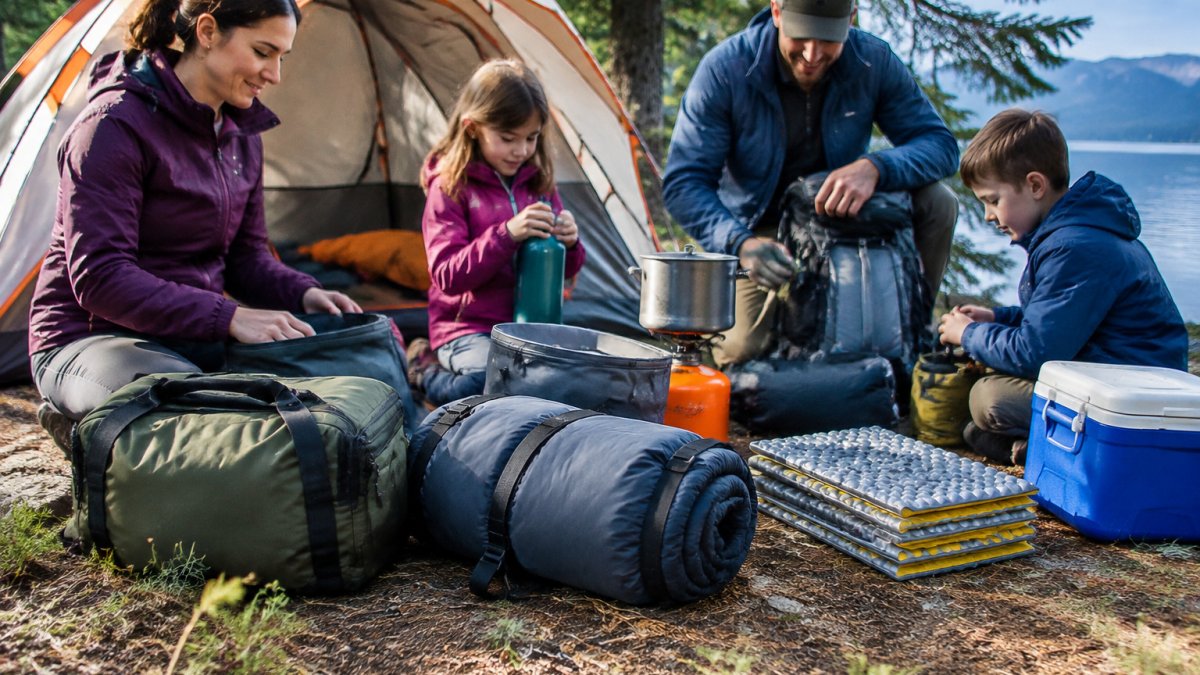
Kids change what you need to bring, and the needs shift fast by age. A baby needs a portable crib and diapers; a toddler needs a safe place to roam and snacks within reach; an older kid needs their own headlamp and something to do during downtime. Pack for their sleep and comfort first, because a kid who sleeps well makes the whole trip better for everyone.
Babies (0-12 months):
- Diapers and wipes for the full trip plus two extra days (a common rule is 10 diapers per day for a newborn, fewer for older babies)
- Portable crib or playpen with a fitted sheet
- Baby sunscreen (check with your pediatrician for age guidance)
- Extra outfits (two per day is a safe baseline)
- Bottles, formula or breast pump supplies, and a cooler for milk
- A soft carrier or stroller for around camp
- A small bag for dirty diapers (pack out all waste if the campground has no diaper service)
Toddlers (1-3 years):
- Small camp chair sized for them (a folding chair with a cup holder reduces spills)
- Favorite blanket and a lovey for sleep
- Snacks they can reach in a small backpack or bin
- Sippy cup with a lid
- Extra outfits (two per day)
- A portable potty or potty seat if they're in training
- A few small toys or books for quiet time
Older children (4-12 years):
- Their own headlamp (kids love having their own light and it keeps hands free)
- A small daypack for their water bottle, snacks, and a jacket
- A game, book, or journal for downtime
- A camera or binoculars if they're interested in nature
- A whistle on a lanyard for safety (teach them to use it only if lost)
Safety and medication for all ages:
- A well-stocked first-aid kit that includes children's fever reducer and any prescription medications
- A written list of allergies and emergency contacts in your wallet and in the first-aid kit
- Insect repellent appropriate for children (check the label for age restrictions)
- A headlamp or flashlight for each child, plus spare batteries
- A small comfort item for each child in case of homesickness
Watch out: Don't assume the campground has a safe place for a baby to sleep. A portable crib or playpen is essential, and it should be set up away from the campfire and cooking area. Also, pack out all diapers and wipes if there's no trash service, leave-no-trace rules apply to families too.
Print this checklist and tick off items as you pack. It helps avoid forgetting something at home, and it gives kids a job by letting them check off their own gear.
Get the Family Camping Checklist PDF and Plan Your Next Trip
Packing gets easier the second time around. Save this list, adjust it for your trip length and season, and keep a copy in the car.
Keep it simple on your next trip, and build the list up over time. Start with the five essentials, add what your kids need, and refine it after each outing.
Frequently Asked Questions
What should a family of four bring camping?
A family of four usually needs one tent sized one step larger than the headcount, a sleeping bag or bedding for each person, sleeping pads, a cooler, a camp stove with fuel, cookware and utensils, water containers, a first-aid kit, flashlights or headlamps with spare batteries, and weather-appropriate clothing layers for each person. Shared items like the stove, lantern and tools can be packed once. Individual items such as sleeping bags, rain gear and shoes should be counted per person, plus one spare set of clothes for each child in case of wet or muddy conditions.
What is the most forgotten item when camping?
Items people most often forget include tent stakes and a mallet, a rain fly or ground tarp, extra batteries, a can opener, trash bags, and a headlamp for hands-free use at the campsite after dark. Toilet paper, hand sanitizer and sunscreen are also commonly left behind. Checking the packing list against the campsite's amenities before leaving helps catch these gaps.
What should you pack for camping with kids?
Packing for kids means adding comfort and safety items to the standard gear. Bring extra changes of clothing, a warm layer for cool nights, a child-sized sleeping bag or pillow, a first-aid kit that includes children's pain reliever and bandages, bug spray formulated for children, sunscreen, and any comfort items like a favorite blanket or stuffed animal. Toddlers and babies need diapers or pull-ups, wipes, a portable crib or play yard, and familiar snacks. Older kids benefit from games, books and a flashlight of their own.
What food should you bring on a family camping trip?
Choose foods that need little preparation and keep well: shelf-stable items like oatmeal, peanut butter, tortillas, canned goods, granola bars and dried fruit, plus cooler foods such as eggs, cheese, deli meat and fresh produce that will stay safe with ice. Plan one simple meal per day, pack a food storage bin that keeps animals out, and bring enough drinking water for each person, since campsites often lack potable water.
Ready to gear up? Shop camping tents, sleep gear, lighting and more at The Camping Gear Guy, and get your family set for the next trip.