 how-to
How to Check Tent Waterproof Ratings (2026 Guide)
Table of Contents
- Where to Find Tent Waterproof Ratings on Specs and Tags
- Hydrostatic Head Rating Explained: What the Numbers Mean
- Minimum Waterproof Rating for Camping by Weather and Use
- Water-Resistant vs. Waterproof Tents: What the Labels Really Claim
- How to Waterproof a Tent: Reproofing and Seam Sealing
- Testing Your Tent's Waterproof Rating at Home
- Common Mistakes When Checking Tent Waterproof Ratings
- Frequently Asked Questions
Last Updated: September 22, 2026
Where to Find Tent Waterproof Ratings on Specs and Tags
Learning how to check tent waterproof ratings starts with knowing where the numbers actually live. Most tents hide this info in two places: the hang tag attached at the store, and the spec sheet on the product page.
The hang tag is your fastest shortcut. Look for a number followed by "mm" or the words "hydrostatic head." If you see "1500mm" or "HH: 2000mm," that's your waterproof rating.
Product pages work the same way. Scroll to the specs section, not the marketing copy. The waterproof rating usually sits near weight, floor dimensions, and material details.
The Camping Gear Guy offers a wide selection of gear, from comfortable sleeping supplies to essential survival tools, all at affordable prices.
Reading the Hang Tag and Product Page
Hang tags vary by brand, so scan for these terms:
- Hydrostatic head (HH) - the main waterproof number
- mm rating - same thing, shorter label
- Coating type - PU, silicone, or PE
- Seam sealing - taped or factory-sealed
- Floor rating - often listed separately from the fly
Some brands only print "waterproof" with no number. That's a red flag. Without a rating, you're guessing.
Check the REI's guide to tent materials and construction for a plain-language breakdown of what coatings and fabrics mean in practice.
Hydrostatic Head Rating Explained: What the Numbers Mean
A hydrostatic head rating measures how tall a column of water a fabric can hold before it leaks. Higher numbers mean better rain protection.
Think of it like a bucket test. The fabric sits at the bottom of a tube. Water fills the tube from above. The height where water finally pushes through is the rating.
So a 1,500mm rating means the fabric holds back a 1,500mm column of water. That's roughly 59 inches.
How the Hydrostatic Head Test Works
Labs clamp a fabric sample under a water column. They raise the water level slowly. The moment three drops appear on the underside, they record the height.
This is a static test. It doesn't simulate wind-driven rain, which hits harder. That's why smart campers add a buffer to any rating.
Two fabrics with the same rating can perform differently too. Coating quality, seam sealing, and fabric age all matter.
Minimum Waterproof Rating for Camping by Weather and Use
The minimum waterproof rating for camping depends on your conditions. A fair-weather weekend tent needs far less protection than a storm-ready shelter.
Here's a quick reference:
| Conditions | Fly Rating | Floor Rating |
|---|---|---|
| Light rain, summer | 1,000-1,500mm | 1,500mm |
| Steady rain, weekends | 1,500-2,000mm | 2,000mm |
| Heavy storms, exposed sites | 2,000-3,000mm | 3,000mm |
| Backpacking, mixed weather | 1,500-2,000mm | 2,000mm |
| Snow or prolonged wet | 3,000mm+ | 3,000mm+ |
Floors take more abuse than flies. You sit, kneel, and drop gear on them. So floor ratings should always match or beat the fly.
A common mistake is buying a tent rated for light rain, then camping through a two-day storm. The fly holds, but the floor soaks through.
Water-Resistant vs. Waterproof Tents: What the Labels Really Claim
"Water-resistant" and "waterproof" are not the same thing, and brands blur the line on purpose.
Water-resistant means the fabric slows water but won't stop it forever. Light mist beads up. Sustained rain eventually soaks through.
Waterproof means the fabric is built to block water under pressure, usually with a coating and sealed seams.
Here's the practical difference:
- Water-resistant tents: fair-weather use, quick trips, low ratings or none listed
- Waterproof tents: listed HH rating, taped seams, coated fabric
A tent labeled "water-resistant" might still handle a light shower. But don't count on it for an all-night soak.
The label itself tells you less than the number. Always hunt for the HH rating first.
How to Waterproof a Tent: Reproofing and Seam Sealing
Even good tents lose their edge over time. UV exposure, dirt, and packed storage break down coatings. When that happens, you reproof.
Here's the process:
- Set the tent up and hose it down to find leaks
- Let it dry completely in the shade
- Clean with mild soap and water, no harsh detergents
- Apply a spray-on or wash-in waterproofing treatment to the fly and floor
- Seal seams with a seam sealer if they're not taped
- Let everything cure fully before packing
Seam sealing matters most. Stitching punches tiny holes in fabric. Taped seams cover those holes at the factory. Untaped seams need sealer.
Check the American Camp Association's outdoor gear care tips for more on extending tent life.
Testing Your Tent's Waterproof Rating at Home
You can test a tent's waterproofing before you trust it in the wild. It takes an afternoon and a garden hose.
Set the tent up on grass or pavement. Skip the rainfly for the first test so you can see the canopy fabric. Then spray steadily from about a foot away.
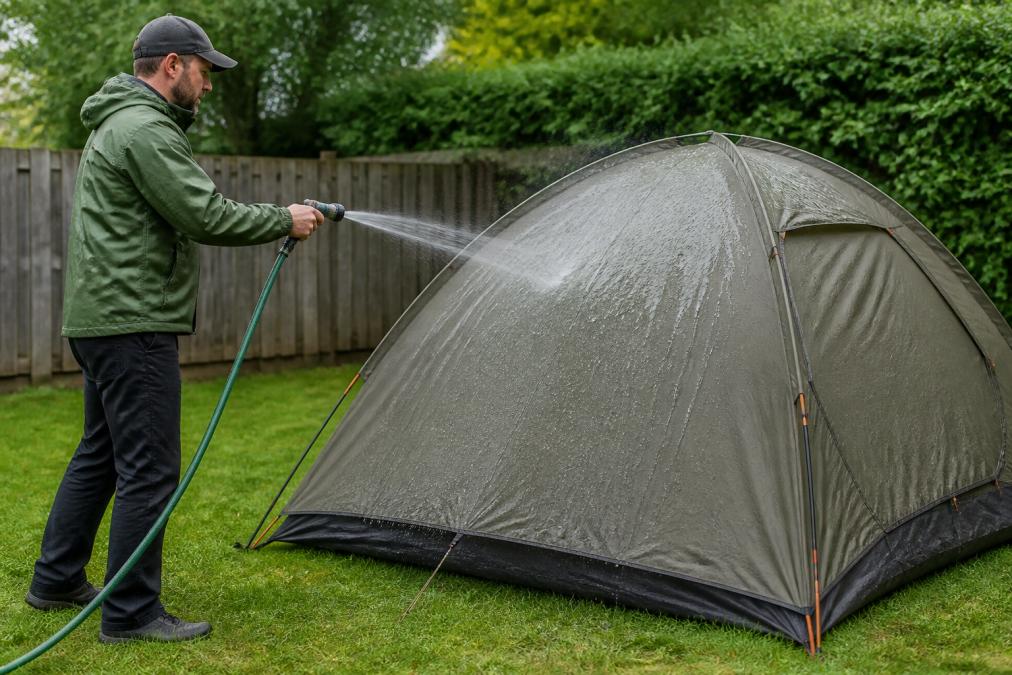
Watch for:
- Water beading and rolling off (good sign)
- Fabric darkening and staying wet (warning sign)
- Drips inside after 5-10 minutes (leak)
- Wet spots at seams (needs sealing)
Add the rainfly and repeat. Then check the floor by pouring a small puddle and waiting.
This won't match a lab test, but it catches real problems. A tent that fails the hose test will fail in a storm.
Common Mistakes When Checking Tent Waterproof Ratings
Most buyers make the same errors. Avoid these and you'll pick better gear.
- Trusting "waterproof" with no number. Always find the HH rating.
- Ignoring the floor rating. Floors wear faster than flies.
- Confusing water-resistant with waterproof. They're different claims.
- Skipping the seam check. Untaped seams leak first.
- Forgetting wind-driven rain. Static ratings don't account for sideways storms.
- Assuming new means sealed. Even new tents can have weak seams.
One more: don't judge by price alone. A budget tent with a clear 2,000mm rating can beat a pricier one with vague claims.
Frequently Asked Questions
What is a good hydrostatic head rating for a tent?
For most three-season camping, a hydrostatic head of 1,500 mm to 3,000 mm handles steady rain well. Budget tents often start around 1,000 mm, which is fine for light showers. If you camp in exposed areas or expect multi-day storms, look for 3,000 mm or higher on both the rainfly and floor. A higher number means the fabric resists more water pressure before it leaks.
How do I find the waterproof rating of my current tent?
Check the hang tag, the inside of the stuff sack, or the product page where you bought it. Most manufacturers list hydrostatic head in millimeters for the fly and floor separately. If the tag is missing, search the model name and year online. When no rating is listed, treat the tent as water-resistant only and plan to seam seal it before your trip.
Does a higher waterproof rating always mean a better tent?
No. A 10,000 mm rating on a poorly designed tent with taped seams that peel or a floor that wicks moisture will still leave you wet. Seam quality, zipper flaps, ventilation, and floor construction matter as much as the number. Match the rating to your typical weather and check the build quality before buying.
Do tent waterproof ratings decrease over time?
Yes. UV exposure, abrasion, and repeated packing break down the polyurethane or silicone coating on tent fabric. A tent rated 3,000 mm when new may drop below 1,000 mm after several seasons of sun. You can restore protection by cleaning the fabric and applying a spray-on or wash-in waterproofing treatment, then resealing the seams.
Picking a tent that actually keeps you dry comes down to reading the specs, not the slogans. At The Camping Gear Guy, we stock tents with full waterproof ratings listed on every page, plus sleeping supplies and gear for families, backpackers, and weekend campers alike. Our team has years in the outdoors, and we price gear to fit real budgets. Shop now at The Camping Gear Guy and find a tent you can trust before the first drop falls.