 Listicle
Essential Camping Safety Tips for First Timers
Quick Summary
The most important camping safety tips for first-timers are to choose a safe campsite and check local rules, watch the forecast for changing weather, keep fires small and fully extinguished, store food properly for the local wildlife, and carry a basic safety kit. Never run a gas stove, lantern or generator inside a tent or enclosed vehicle, because carbon monoxide can build up silently.
- Camp at least 200 feet from lakes and streams on backcountry trips.
- Never camp in a dry creek bed, narrow canyon or wash, since flash floods can arrive without rain where you are.
- Keep any fire at least 15 feet from tents, gear and low branches.
- Drown the fire, stir the ashes, then pour more water until the ashes feel cold.
- Share your trip plan and expected return time with someone at home.
Table of Contents
- Why Safety Planning Matters Before Your First Night Outdoors
- Tip 1: Choose a Safe Campsite and Check Local Rules
- Tip 2: Check the Weather and Plan for Changing Conditions
- Tip 3: Follow Campfire Safety Tips and Keep Ventilation Safe
- Tip 4: Store Food Safely Based on Wildlife Risk
- Tip 5: Pack the Right Camping Safety Gear
- Your Camping Safety Checklist and Emergency Plan Before You Leave
- Frequently Asked Questions
Why Safety Planning Matters Before Your First Night Outdoors
Good camping safety tips for first-timers start with planning ahead, because the risks that hurt beginners rarely show up on the trail. People often pack the tent and forget the plan for when things go wrong. Most injuries and emergencies on a first trip come from weather, fire, food and not knowing how to get help.
Below, we walk through five practical tips and close with a checklist you can use before you leave. Each tip covers a risk that catches beginners off guard, along with a simple fix.
Tip 1: Choose a Safe Campsite and Check Local Rules
A safe campsite is flat, away from dead trees and dry creek beds, and clear of overhead branches. But the difference between a good first trip and a miserable one often comes down to the details you check before you ever leave the pavement. Before you book, check the campground's current rules.
Look up the land manager for the area, such as the National Park Service, U.S. Forest Service or your state park system. Their sites list closures and alerts you won't always find on a booking page. Check the specific ranger district or park unit, not just the national homepage, because restrictions are set locally.
Site selection checklist for first-timers:
- Ground surface: Look for level, durable ground. Avoid depressions where water pools and low spots at the base of hills where cold air settles overnight.
- Overhead hazards: Scan for dead branches, known as widowmakers, hanging in the trees above your tent pad. Even on a calm day, these can fall without warning.
- Distance from water: Camp at least 200 feet from lakes and streams on backcountry trips. This protects water quality and keeps you out of flash-flood paths. In developed campgrounds, follow posted rules.
- Flash-flood awareness: Never camp in a dry creek bed, narrow canyon, or wash. Flash floods can arrive with no rain falling where you are, triggered by storms miles upstream.
- Wind exposure: A site with natural windbreaks, trees, rock formations, or a hillside, will be warmer and safer than an exposed ridge.
- Emergency access: Note the nearest road or trailhead. If someone gets hurt, you want to know the fastest route out before dark.
Rules to verify before you arrive:
- Fire bans and stove restrictions (these change weekly in dry seasons)
- Quiet hours and generator hours
- Food storage requirements (bear boxes, hard-sided vehicle rules)
- Pet leash rules and wildlife closures
- Check-in and check-out times, and whether late arrival is allowed
A quick call to the campground office the week before your trip will confirm what the website may not update. Ask specifically about fire restrictions, wildlife activity, and any closures on your planned route.
Tip 2: Check the Weather and Plan for Changing Conditions
Check the forecast for the exact campsite location, not just the nearest town, and check it again the morning you leave. Mountain and coastal weather can shift within hours. Pack a rain layer, a warm layer for nighttime temperatures that drop faster than expected, and a tarp for shelter.
Set a simple rule before you go: if storms are forecast, have a plan to move to a lower-risk site or leave early. Beginners who commit to a plan ahead of time make better calls when conditions turn.
Tip 3: Follow Campfire Safety Tips and Keep Ventilation Safe
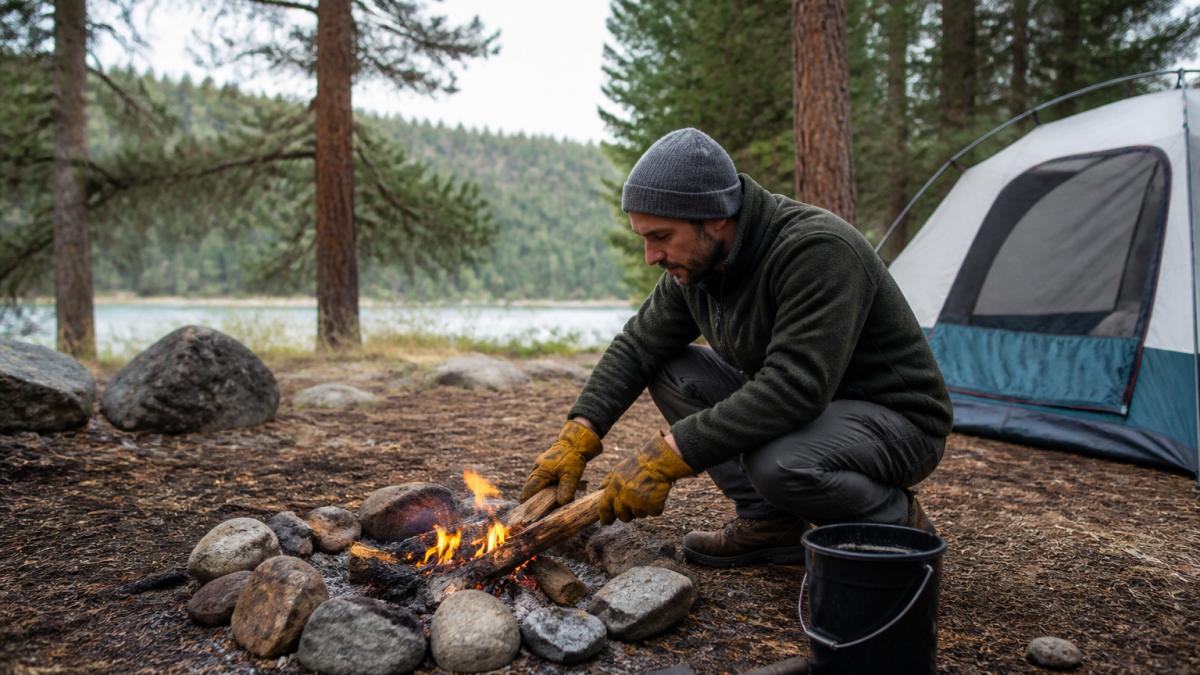
Fire causes some of the most serious first-trip accidents, so follow these camping safety tips and keep it small and contained. Build it inside a fire ring, keep it away from tents and overhanging branches, and keep water and a shovel nearby. Never leave a fire unattended, and drown it fully until it is cold to the touch.
The carbon monoxide gap most beginner guides miss: Carbon monoxide is an odorless, colorless gas produced by burning fuel, including propane, gasoline, charcoal, and wood. It builds up silently in enclosed spaces and can cause headache, dizziness, nausea, confusion, and death before a person realizes what is happening. Never run a gas stove, lantern, heater, or generator inside a tent or enclosed vehicle. Cook and heat only in open air. Even a tent with mesh panels can trap CO if the source is inside and ventilation is poor.
Campfire safety steps:
- Check the burn ban first. The U.S. Forest Service and National Park Service post current fire restrictions online. If a burn ban is in effect, use a camp stove instead, and check whether stove restrictions apply too.
- Use the provided fire ring. If none exists, use a established fire ring or build a mound fire on mineral soil, never on duff or roots. Keep the fire at least 15 feet from tents, gear, and low branches.
- Keep water and a shovel within arm's reach. A small bucket of water and a shovel are your first response tools. Sand or dirt can smother flames if water runs short.
- Never leave it unattended. Even a small fire can spread in wind. If you step away, put it out.
- Drown, stir, drown again. Pour water until the flames are out, stir the ashes with a shovel, then pour more water. Feel the ashes with the back of your hand, if it's warm, it's not out. Repeat until cold.
Ventilation beyond the tent: Enclosed vehicles, screen houses, and campers all carry CO risk if fuel-burning devices are used inside. Never run a generator inside a garage, tent, or vehicle. Place generators outdoors, away from windows and doors, and follow the manufacturer's clearance distances. A battery-powered CO alarm is inexpensive insurance for any enclosed shelter.
Tip 4: Store Food Safely Based on Wildlife Risk
Food storage protects both your food and the wildlife around you. Keep all food, toiletries and trash out of your tent. Store them in airtight containers, a locked vehicle, or a bear box or food locker where the campground provides one.
How strict you need to be depends on the wildlife in the area. In bear country, use approved storage every time, including for coolers and cooking residue. In areas with raccoons, squirrels or birds, sealed containers and clean campsites are usually enough. Ask the campground staff what is active in the area before you arrive.
Tip 5: Pack the Right Camping Safety Gear
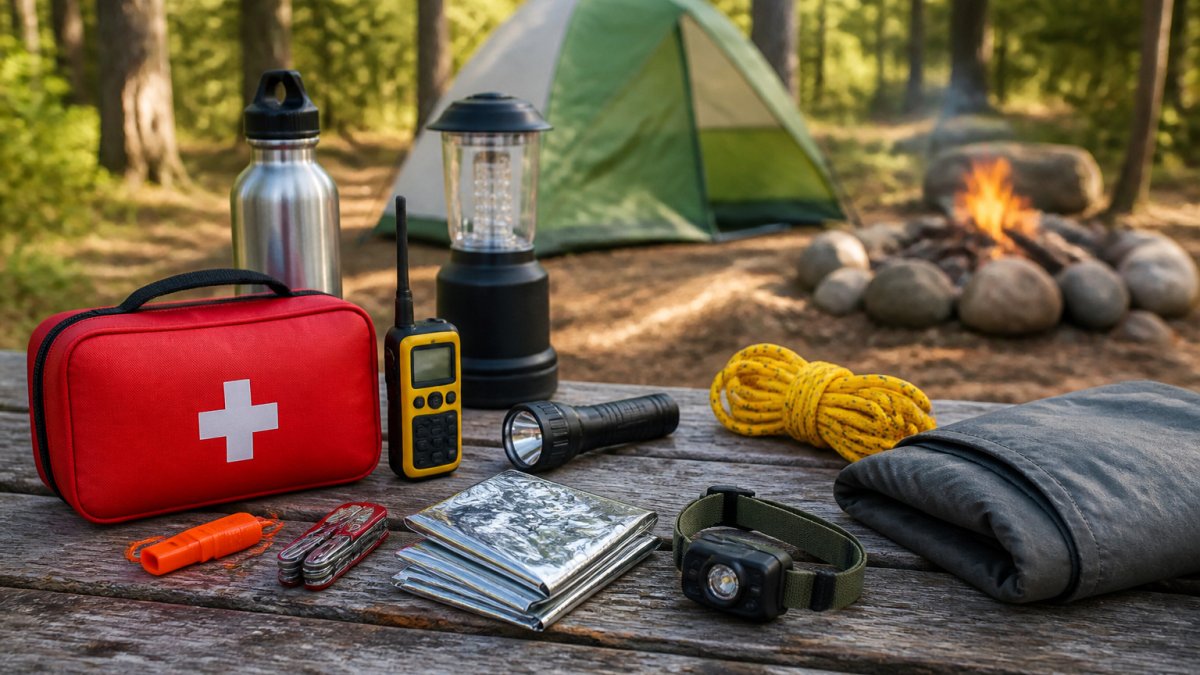
A short list of safety gear covers most first-trip emergencies. Pack a first-aid kit with bandages, antiseptic, pain relief and any personal medications. A whistle to signal for help is a small addition that can matter most in an emergency. Add a flashlight or headlamp with spare batteries.
Bring insect repellent and sunscreen, and enough drinking water for everyone. Filter or treat any water from natural sources before you drink it. A personal water filter is a useful backup for hiking and emergency preparedness. Our guide to choosing essential survival tools for camping and hiking covers the rest of your kit. You can find a portable water filter for hiking and emergency preparedness in our shop.
Your Camping Safety Checklist and Emergency Plan Before You Leave
Use this checklist before you head out:
- Campsite confirmed and rules checked
- Fire restrictions and area closures reviewed
- Forecast checked for the campsite location
- First-aid kit, headlamp and whistle packed
- Food stored in airtight containers or approved storage
- Water supply and filtration planned
- Carbon monoxide alarm packed for any enclosed shelter
- Trip plan shared with someone at home, including your expected return time
Your emergency plan should also cover how you will contact help. Cell service is often unreliable in campgrounds, so carry a whistle, know the campground's address and emergency number, and tell someone your location before you leave. Should something go wrong, you will be able to act quickly.
Visit The Camping Gear Guy's website to explore our camping and outdoor gear and finish your first-trip kit before you leave. Shop Now.
Here is a quick reference of the key items to confirm before you head out, drawn from the checklist above.
| Item | Why it matters | Note |
|---|---|---|
| Fire restrictions | Bans change weekly in dry seasons | Check the park or forest site |
| Forecast | Conditions can shift within hours | Check the campsite location and again the morning you leave |
| Carbon monoxide alarm | CO builds up silently in enclosed spaces | Pack it for any enclosed shelter |
| Food storage | Protects food and wildlife | Use approved storage in bear country |
| Camp distance from water | Protects water quality and avoids flash floods | At least 200 feet on backcountry trips |
| Fire clearance | Keeps flames from tents and branches | At least 15 feet from tents, gear and low branches |
| Trip plan | Helps others find you if needed | Share your expected return time |
Frequently Asked Questions
What should first-time campers know before their first trip?
Plan around three things: where you will camp and what the campground rules are, what the weather will do during your stay, and how you will get help if something goes wrong. Check whether fires are allowed and whether firewood must be local, confirm the campsite is open, and tell someone at home your route and return date. Practice setting up your tent in your backyard before you leave, so you are not learning in the dark. Pack more water and food than you think you need, and keep a first-aid kit within reach.
What safety gear should you bring camping?
At minimum, bring a first-aid kit, a headlamp or flashlight with spare batteries, a whistle, a fire starter or matches in a waterproof case, a way to receive weather alerts, and a backup shelter option such as a tarp. Add insect protection and sunscreen, and a water filter or treatment method if you plan to drink from natural sources. Keep these items together in one accessible bag so you can find them quickly in an emergency.
How do you store food safely at a campsite?
Keep all food, toiletries and scented items out of your tent. Use airtight containers in a locked vehicle when one is available, or the bear-resistant storage or food lockers the campground provides. If none is provided, hang food from a branch well away from your tent, or keep it in a cooler in your car. Clean up food scraps and dispose of trash immediately, since smells attract wildlife. Store food by animal risk: in areas with bears, storage must be stricter than in areas with only raccoons or chipmunks.
What should you do if you encounter wildlife while camping?
Stay calm, keep your distance, and never feed or approach the animal. Make yourself look large, speak firmly, and back away slowly toward a safe structure or vehicle. Avoid running, which can trigger a chase response in many animals. Keep children close and never let them approach wildlife for photos. Report aggressive or unusual behavior to the campground host or park rangers.
What should be on a camping safety checklist?
A useful camping safety checklist covers five areas: campsite and rule checks, weather and fire restriction checks, a first-aid kit and emergency signaling tools, water and food storage plans, and a written emergency plan. The emergency plan should list your location, the nearest hospital, and how to call for help if you have no cell service, such as using a satellite messenger or a landline at the campground office. Review the list the night before you leave and again when you arrive.