 listicle
Budget Camping Meals for Beginners: 7 Easy Ideas
Table of Contents
- Why Budget Camping Meals Matter for Beginners
- Camp Cooking Essentials for Beginners
- 7 Best Budget Camping Meals for Beginners
- Build Your Budget Camping Meal Plan
- Make-Ahead Camping Meals to Prep at Home
- One-Pot Camping Meals That Minimize Cleanup
- Food Safety and Cooler Management for Beginners
- Common Beginner Mistakes to Avoid
- Frequently Asked Questions
Last Updated: October 7, 2026
Why Budget Camping Meals Matter for Beginners
Starting your camping journey doesn't require expensive gear or complicated recipes. A few simple ingredients, basic equipment, and confidence transform mealtime from stressful to enjoyable.
Budget camping meals solve a real problem: eating well without spending a fortune or hours at the campfire. Planned thoughtfully, affordable camping food tastes better than you'd expect.
At The Camping Gear Guy, one question comes up constantly: "What should we eat?" The best budget camping meals use pantry staples, require minimal equipment, and deliver real nutrition without breaking your budget. Below are the essentials and seven meal ideas.
Camp Cooking Essentials for Beginners
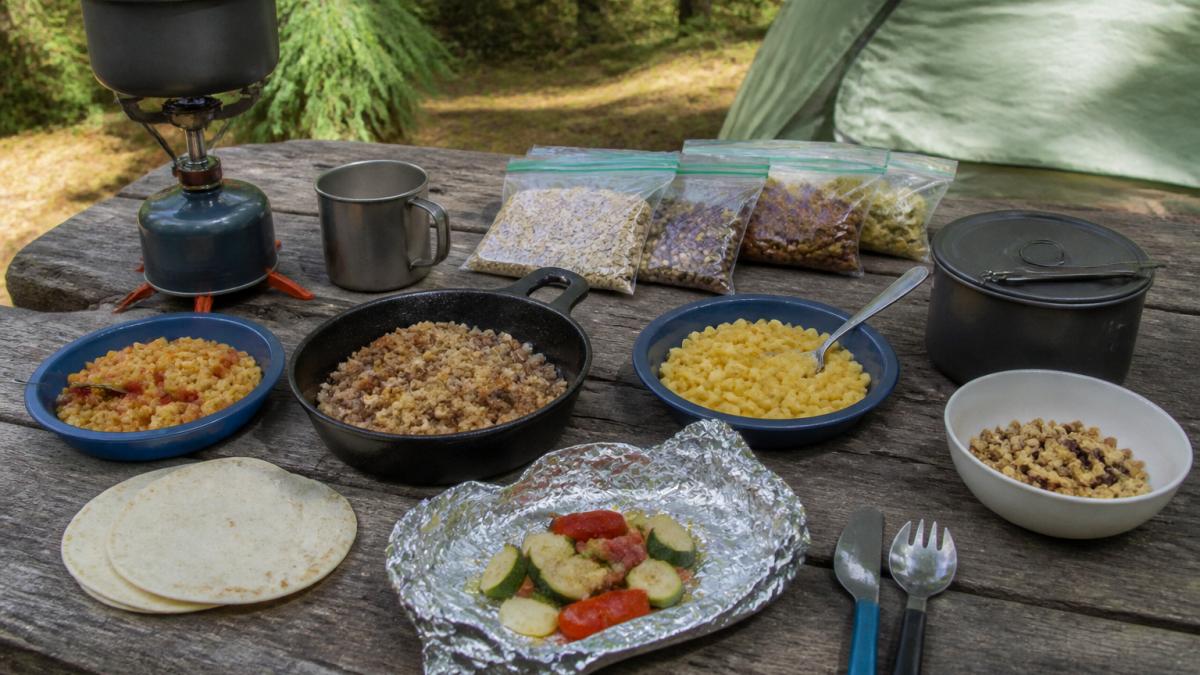
Basic Equipment You Actually Need
You don't need a full kitchen to cook at camp. Start with these fundamentals.
A camp stove or portable burner gives you reliable heat for boiling water, heating soup, or cooking pasta.
Cast iron cookware works over both campfire and camp stove.
Lightweight cookware includes a pot for boiling or heating soup, a pan for frying, and utensils. A single 3-quart pot covers most needs.
Basic tools include a spatula, tongs, a wooden spoon, and a knife, wrapped in a towel to save space.
A cooler keeps perishables safe. Stock it with ice before you depart to maintain safe temperatures for several days.
Pantry Staples That Travel Well
Stock these items before each trip, and you'll have options for any meal.
Grains travel well: rice, pasta, oatmeal, and tortillas store easily and provide filling bases. They're inexpensive and shelf-stable, so buy in bulk.
Proteins include eggs, canned beans, hot dogs, sausage, and peanut butter.
Vegetables that keep include potatoes, sweet potatoes, onions, and carrots. These need no refrigeration and cook well in foil packets or one-pot meals.
Seasonings and basics: salt, pepper, garlic powder, and oil transform simple ingredients into real food.
Breakfast items include oatmeal, bread, cheese, and jam, which combine easily into quick morning meals.
7 Best Budget Camping Meals for Beginners
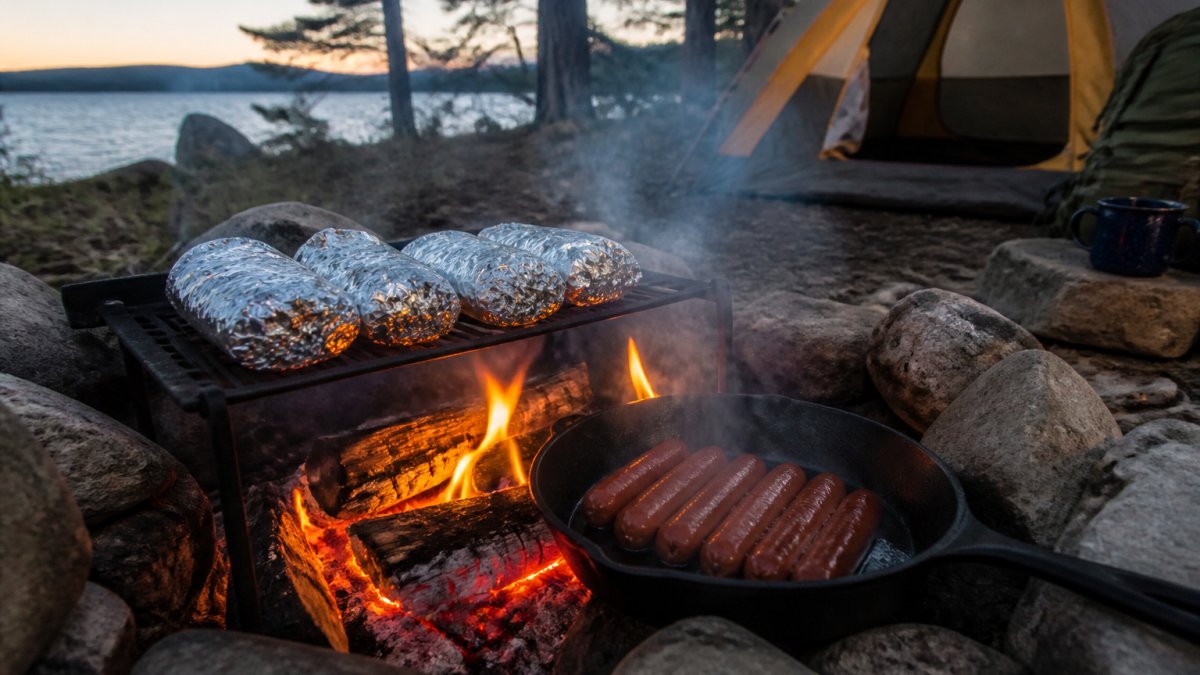
1. Foil Packet Dinners
Foil packet dinners are the workhorse of budget camping meals. Layer protein, vegetables, and seasoning in heavy-duty foil, seal, and cook over heat. No cleanup beyond the foil.
Tear off a 12-inch sheet of foil.
Cook over a campfire grate or camp stove for 15-20 minutes, depending on vegetable thickness. Cut potatoes thin since they take longest. Eat straight from the foil.
Cost per serving runs low because you're using affordable proteins and vegetables. Make-ahead camping meals work here too; assemble packets at home and cook at camp.
2. Breakfast Burritos (Make-Ahead)
Make breakfast burritos at home, wrap them tightly in foil, and reheat at camp. This saves morning time and ensures everyone eats.
Mix scrambled eggs, cooked sausage or bacon, shredded cheese, and diced potatoes on a large flour tortilla. Add salsa, wrap tightly in foil, and store in your cooler.
At camp, place the foil-wrapped burrito on a grill grate over low heat for 5-10 minutes, turning once, or warm it in a skillet. Serve with hot sauce or cheese.
These burritos stay fresh for 3-4 days in a cooler, ideal for multi-day trips. Assemble a dozen at home and breakfast is ready for your group.
3. One-Pot Chili
One-pot meals minimize cleanup and maximize flavor. Chili is the classic example: brown ground beef or sausage, add canned beans, canned tomatoes, and spices, then simmer 15 minutes.
You need one burner, one pot, and five ingredients: ground beef or sausage, two cans of beans, one large can of diced tomatoes, chili powder, and salt.
Chili feeds a crowd, tastes better the next day, and costs almost nothing per serving. Leftovers work for lunch or as a base for other meals.
4. Hot Dogs with Grilled Vegetables
Hot dogs are the ultimate budget camping meal. They cook in minutes, require minimal equipment, and appeal to almost everyone.
Bring hot dogs, buns, and toppings (mustard, ketchup, relish, onions, peppers). Cook hot dogs on a stick over the campfire or in a skillet, and grill vegetables alongside.
Grilled vegetables add nutrition and flavor without expense. Slice them thin, toss in a skillet with oil and salt, and they're done in 5-10 minutes.
This meal costs pennies per person and works for any size group. Beginners often underestimate how good simple grilled vegetables taste at camp.
5. Oatmeal and Breakfast Sandwiches
Oatmeal is the cheapest breakfast option available. Bring instant packets or bulk oats, and you have breakfast for a week.
Boil water on your camp stove, add oatmeal, and top with brown sugar, cinnamon, dried fruit, nuts, or peanut butter. It's filling and requires one pot.
Breakfast sandwiches combine bread, cheese, and eggs for a heartier option. Cook eggs in cast iron, layer on bread with cheese, and you have a complete meal.
Both are budget camping meals requiring almost no prep.
6. Pasta Salad and Cold Sandwiches
Cold meals work well for lunch or dinner when you want minimal cooking. Pasta salad combines cooked pasta, canned vegetables, and simple dressing, made at home and eaten cold.
Combine cooked pasta with canned corn, canned beans, diced onions, and a basic vinaigrette (oil, vinegar, salt, pepper). It stays fresh in your cooler for days.
Cold sandwiches use bread, deli meat, cheese, and vegetables. Bring hard cheeses and cured meats since they stay fresh longer. Tortilla or bagel sandwiches travel even better.
These no-cook meals are ideal for hot days when you don't want to cook over a fire.
7. Grilled Cheese and Canned Soup
This pairing feels like comfort food at camp. Grilled cheese cooks in a skillet in minutes, and canned soup heats in the same pot.
Butter bread, add hard cheese that doesn't need refrigeration, and cook in cast iron until golden. Heat canned soup on your camp stove while the sandwiches cook.
This budget camping meal costs under two dollars per person and tastes like a treat.
Build Your Budget Camping Meal Plan
Sample 3-Day Meal Plan
Planning ahead prevents waste and ensures you have the right ingredients. Here's a simple 3-day plan for a family of four:
Day 1: Breakfast burritos (made at home), lunch of sandwiches and pasta salad, dinner of foil packet with ground beef and vegetables.
Day 2: Oatmeal for breakfast, one-pot chili for lunch and dinner.
Day 3: Breakfast sandwiches with eggs, hot dogs with grilled vegetables for lunch, grilled cheese and canned soup for dinner.
This plan uses simple ingredients, requires minimal cooking, and costs less than eating out.
Cost Breakdown and Shopping Strategy
Budget camping meals work because you're buying ingredients, not prepared food. Ground beef costs less per pound than pre-made meals. Canned vegetables cost pennies. Eggs and cheese are affordable proteins.
For a family of four on a 3-day trip, expect to spend forty to sixty dollars on food, including breakfast, lunch, dinner, and snacks.
Shop sales before your trip, stock up on canned goods when discounted, and buy eggs, cheese, and meat from budget retailers. Plan meals around what's affordable that week.
Make a detailed shopping list organized by store section to prevent impulse buys and forgotten essentials. Check your pantry first.
Make-Ahead Camping Meals to Prep at Home
Preparing food at home saves time at camp and reduces stress.
Breakfast burritos are the classic make-ahead meal: assemble at home, wrap in foil, and reheat at camp.
Chili tastes better the next day, so cook it at home, cool it, and reheat at camp from a sealed container.
Pasta salad combines cooked pasta and vegetables at home. Transport in a sealed container and eat cold at camp.
Pre-cut vegetables save time at camp.
Cook rice or pasta at home to simplify camp cooking.
Make-ahead camping meals are one of the smartest strategies for budget trips: less cooking time, less food waste, and better eating.
One-Pot Camping Meals That Minimize Cleanup
One-pot meals are the secret to enjoying camp cooking without hours of cleaning. Use one burner and one pot.
Chili is the classic one-pot meal: brown meat, add beans and tomatoes, and simmer.
Pasta dishes combine pasta, canned sauce, and protein in one pot. Cook pasta, drain, add sauce and cooked meat, and reheat.
Soups are natural one-pot meals: combine broth, vegetables, and protein, simmer until tender, and serve. Canned soups require even less work.
One-pot camping meals free you to enjoy your trip instead of stirring multiple pans.
Food Safety and Cooler Management for Beginners
Keeping food safe at camp prevents illness and waste. A few simple practices keep everything fresh.
Keep your cooler in the shade and out of direct sunlight. Open it only when necessary.
Pack ice or ice packs on top of food, not underneath, since cold air sinks.
Store raw meat on the bottom shelf of your cooler, below ready-to-eat food, to prevent cross-contamination.
Keep perishables in sealed containers to prevent flavors from mixing and ease cleanup.
Discard food that's been above 40 degrees for more than two hours.
Wash your hands before eating and after handling raw meat.
These practices are simple but critical for safe budget camping meals.
Common Beginner Mistakes to Avoid
Beginners often make predictable mistakes that spoil otherwise good trips.
Bringing too much food is the number one mistake, adding excess weight and wasted money.
Forgetting basic seasonings makes simple food taste bland. Bring salt, pepper, and a few spices.
Overpacking equipment wastes space and adds weight.
Not testing recipes at home means surprises at the campfire.
Ignoring cooler management spoils food quickly. Pack ice, keep the cooler in shade, and monitor temperatures.
Cooking too much for one meal creates waste.
Not planning meals leads to repetitive eating or running out of food.
Planning budget camping meals for beginners doesn't require culinary skills or expensive gear.
When you're ready to gear up, The Camping Gear Guy has everything you need for your next adventure.
Frequently Asked Questions
What are the easiest budget camping meals for beginners to cook?
Foil packet dinners, hot dogs, and one-pot meals are the easiest options because they require minimal equipment and skill. Foil packets cook directly over a campfire or camp stove with no cleanup, while hot dogs and one-pot chili need only a basic stove and single cooking vessel. These budget camping meals let you focus on enjoying camp rather than complicated cooking.
How do I create a budget camping meal plan that works for my trip?
Start by choosing 2-3 breakfast options (oatmeal, burritos, sandwiches), 2-3 lunches (cold sandwiches, pasta salad, no-cook meals), and 3-4 dinners (foil packets, one-pot chili, hot dogs). Plan one meal per person per day, then create a shopping list grouped by meal. A budget camping meal plan for a family of four for three days can be very affordable when you use pantry staples like rice, beans, eggs, and canned goods.
What make-ahead camping meals can I prepare at home before the trip?
Breakfast burritos, pasta salad, and chili freeze well and can be made 1-2 weeks ahead. Pack them in a cooler with ice, and they'll stay cold throughout your trip. Make-ahead camping meals save time at camp and reduce the stress of cooking from scratch. You can also chop vegetables and portion ingredients into bags before you leave home.
What camp cooking essentials for beginners do I actually need to bring?
You need a camp stove or grill grate, a single large pot or skillet, a spatula, a cooking spoon, plates, utensils, and a lighter or matches. Camp cooking essentials for beginners don't have to be expensive, a basic camp stove is affordable, and you can use a cast-iron skillet you already own. Many beginners overpack gear; focus on one reliable cooking method and build from there.
How do I keep camping food safe in a cooler for several days?
Pack a cooler with ice or frozen water bottles, keeping raw meat, dairy, and prepared foods at 40°F or below. Use a separate cooler for drinks to avoid opening the food cooler repeatedly. Store raw meat on the bottom shelf away from other foods, and discard any food left at room temperature for more than 2 hours (1 hour if it's above 90°F). Check cooler temperature with a thermometer if possible.