 ultimate-guide
Beginner Camping Checklist for 2026: Essential Gear Guide
Table of Contents
- The 2026 Beginner Camping Checklist: What to Pack
- How to Find Affordable Camping Gear for Beginners
- Your Camping Food Checklist for Beginners
- Camping Safety Tips for Beginners
- Leave No Trace: Camping Responsibly
- Post-Trip Maintenance: Make Your Gear Last
- Frequently Asked Questions
Last Updated: September 22, 2026
The 2026 Beginner Camping Checklist: What to Pack
A beginner camping checklist is a categorized packing list that covers shelter, sleep systems, cooking gear, lighting, clothing, safety supplies, and camp furniture for a first overnight trip.
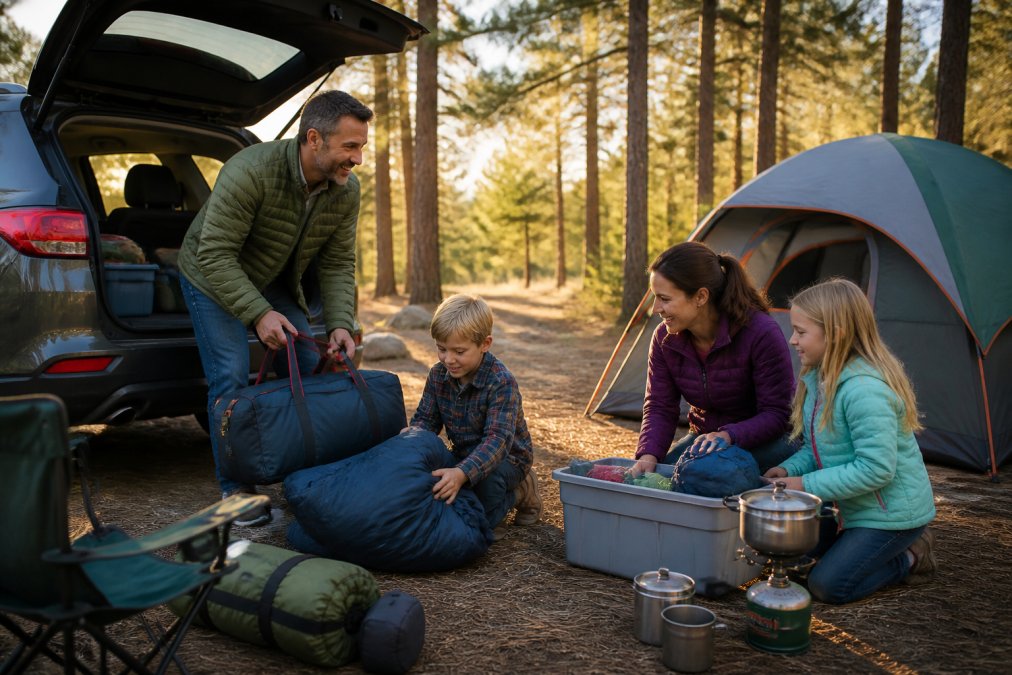
Here's the short version, then the detail:
| Category | Must-Have Items | Why It Matters |
|---|---|---|
| Shelter and sleep | Tent, footprint, sleeping bag, sleeping pad | Warmth and dry rest |
| Camp kitchen | Camp stove, fuel canister, cook kit, water filtration | Food and safe water |
| Lighting | Headlamp, lantern, spare batteries | Hands-free visibility |
| Clothing | Moisture-wicking base layers, rain shell | Temperature control |
| Tools | Multi-tool, paracord, fire starter | Repairs and fire |
| Furniture | Camp chair, folding table | Comfort after hiking |
Shelter and Sleeping Systems
Sleep quality decides whether a first trip becomes a habit. A three-season tent sized for one more person than your group, a footprint underneath, and a sleeping bag rated roughly 10°F colder than the lowest temperature you expect covers most trips. Pair the bag with a sleeping pad; its R-value measures how well it blocks cold from the ground, and a pad matters as much as the bag on chilly nights.
Check the rainfly and seam seals before you leave. Stake out guylines so the fly stays off the tent walls, and pick a campsite on flat, drained ground rather than a low spot that collects rain. If you're camping where bears are active, store food in a bear canister or hang it well away from your tent.
Camp Kitchen and Cooking Gear
A simple kitchen beats a fancy one. Most beginners need a single-burner camp stove, a matching fuel canister, one pot, a mug, utensils, and a lighter or fire starter. Add water filtration or purification tablets so you're never dependent on a single water source, and bring a small tarp or tablecloth for a clean cooking surface. Organize it all in one bin so you're not hunting for the spatula by headlamp.
Lighting and Illumination
Bring two light sources per person: a headlamp for hands-free tasks and a lantern for the table. A headlamp with a red-light mode preserves night vision and won't wake your tentmate. Pack spare batteries even if your lights are rechargeable, and keep one light in your pocket at all times. Losing your only light at dusk turns a calm evening into a scramble.
Clothing and Footwear
Dress in layers, not one heavy jacket. A moisture-wicking base layer, an insulating mid layer, and a waterproof shell let you adjust as the temperature swings. Bring one dry set of clothes that stays in the car or a dry bag, reserved for sleeping. Broken-in boots beat new ones; blisters end trips early. Add a hat, gloves, and wool socks even in summer, because mountain nights get cold.
Tools and Multi-tools
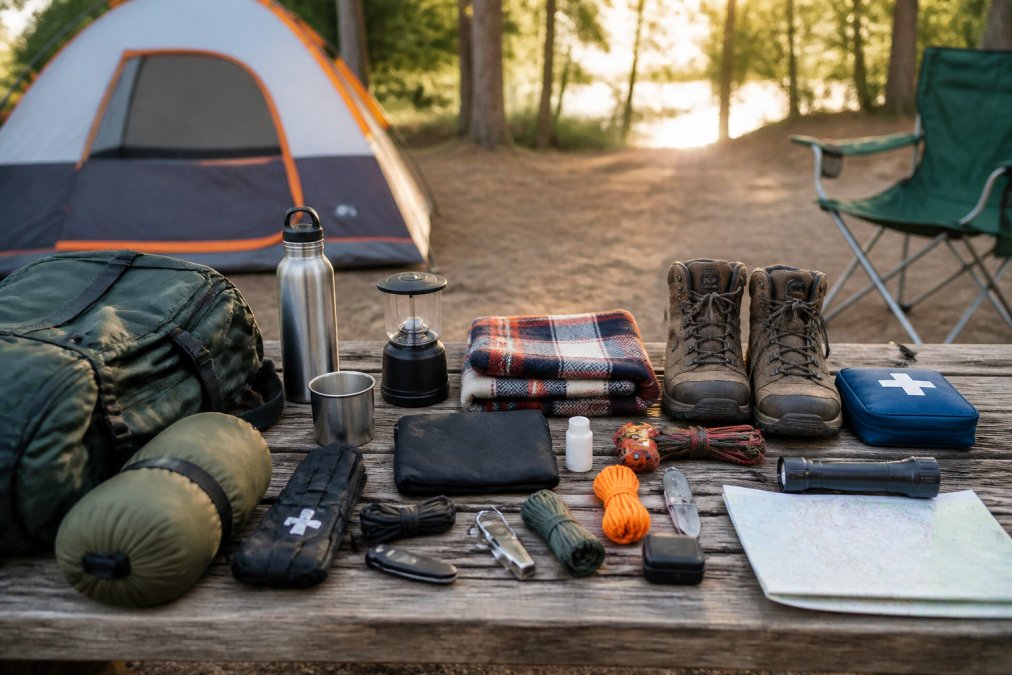
A multi-tool, a length of paracord, and duct tape handle most campsite repairs. Parcord doubles as a clothesline, a tarp tie, or a replacement guyline. A small repair kit for your tent and pad saves a trip when a seam or valve fails. Carry an emergency whistle on a lanyard; three blasts is the universal signal for help.
Camp Furniture (Chairs and Tables)
You'll spend more time sitting than you expect. A folding camp chair and a small table turn a rough site into a comfortable base, and they matter most for families and car camping. Look for a chair with a weight rating above your heaviest camper and a table that packs flat. This is the gear people skip, then wish they hadn't.
How to Find Affordable Camping Gear for Beginners
Affordable camping gear for beginners comes from buying the essentials first and upgrading later. Start with shelter, sleep, and cooking, rent or borrow the rest, and add comfort items as you learn what you actually use. Off-season sales, end-of-season clearance, and bundled starter kits stretch a budget further than buying every gadget at once.
- Buy the big three first: tent, sleeping bag, pad
- Borrow or rent furniture and specialty tools for trip one
- Watch for end-of-season clearance on last year's models
- Skip gear you can't name a use for
- Read weight and material specs, not marketing copy
A common mistake is chasing the lowest price on a tent that leaks.
Your Camping Food Checklist for Beginners
A camping food checklist for beginners should be simple, shelf-stable, and easy to cook on one burner. Plan one-pot meals, pre-measure ingredients at home, and pack more water than you think you need. Freeze-dried meals, oatmeal, tortillas, peanut butter, trail mix, and instant coffee cover most trips with almost no cleanup.
| Meal | Easy Option | Prep at Home |
|---|---|---|
| Breakfast | Oatmeal, instant coffee | Pre-mix oats and toppings |
| Lunch | Tortillas, peanut butter, fruit | Portion into bags |
| Dinner | One-pot pasta or freeze-dried meal | Pre-measure dry goods |
| Snacks | Trail mix, jerky, granola bars | None |
Camping Safety Tips for Beginners
Camping safety tips for beginners start with weather preparedness and a stocked first aid kit. Check the forecast before you leave, tell someone your plans and expected return, and know how to reach help. Pack a first aid kit with bandages, blister care, pain reliever, and any personal medication, plus sun protection and insect repellent.
Leave No Trace: Camping Responsibly
Leave No Trace means packing out everything you bring in and leaving your site as you found it. Choose a durable campsite surface, keep fires in established rings, and bury human waste properly. These habits protect the places you love and keep them open to campers.
Post-Trip Maintenance: Make Your Gear Last
Post-trip maintenance is the step almost everyone skips, and it's why gear fails early. Dry your tent completely before storing it, clean and re-lubricate your stove, and check your sleeping pad for leaks. Store sleeping bags loosely, never compressed, so the insulation keeps its loft.
- Air-dry the tent and footprint fully, then store loose
- Wipe down the stove and check the fuel connection
- Inspect guylines, stakes, and zippers for wear
- Wash and dry cookware before packing away
- Store sleeping bags hanging or in a large cotton sack
Frequently Asked Questions
What are the 10 must-haves for a beginner camping checklist in 2026?
The 10 must-haves are a tent with a rainfly, a sleeping bag rated for the season, a sleeping pad with an R-value of 2 or higher, a headlamp, a camp stove with fuel canister, a first aid kit, a multi-tool, a water filtration system, a fire starter, and a tarp. These cover shelter, sleep, food, light, safety, and weather preparedness for most car camping trips.
What is the most forgotten item when camping?
Tent stakes and guylines top the list of forgotten items. Many campers assume their tent includes enough stakes, but wind and rain will test every corner. A close second is a fire starter, since lighters fail in wet conditions. Pack a backup lighter, waterproof matches, or a ferro rod, and always count your tent stakes before leaving home.
How do I choose affordable camping gear for beginners without sacrificing quality?
Prioritize three items where quality matters most: your tent, sleeping bag, and sleeping pad. Buy those from established brands, even if they cost more. Save money on camp furniture, cookware, and storage by choosing simple designs. Check weight and material specs before buying, and read return policies so you can test gear risk-free.
What should a camping food checklist for beginners include?
Plan one-pot meals like chili, pasta, or oatmeal. Pack shelf-stable items such as canned beans, rice, peanut butter, tortillas, and dried fruit. Bring a camp stove, fuel canister, lighter, small pot, spatula, and biodegradable soap for cleanup. Store food in a bear canister or sealed dry bag, and never leave scraps at your campsite. Pre-chop vegetables at home to cut prep time.
What are the most important camping safety tips for beginners?
Check the weather forecast before you leave and pack layers for rain and cold. Bring a first aid kit, emergency whistle, and insect repellent. Choose a campsite away from dead trees and low ground that floods. Store food properly to avoid attracting wildlife, and tell someone your plans and expected return time. Never rely on phone signal alone in remote areas.
What is the 4-4-4 rule for camping?
The 4-4-4 rule is a simple planning guideline: stop driving by 4 p.m., set up camp by 4 p.m., and keep your travel day under 4 hours. It reduces stress for first-time campers, ensures you pitch your tent in daylight, and leaves time to cook dinner before dark. Adjust the numbers for your family, but the principle of arriving early holds true.
How do I prepare for my first camping trip in 2026?
Start with a car camping trip close to home so you can bail out if needed. Use a beginner camping checklist to pack, practice setting up your tent in the yard first, and plan simple meals you can cook in one pot. Book a reservable campsite, check fire restrictions, and bring more water than you think you need. Test every piece of gear before you go.
The hardest part of a first camping trip isn't the packing list; it's trusting that your gear will hold up when the weather turns. The Camping Gear Guy carries reliable tents, sleeping bags, camp furniture, and survival tools at prices built for beginners, backed by a fast, user-friendly shopping experience and a team that answers questions before you buy. Get started with The Camping Gear Guy and pack your first trip with gear you can count on.