 blog
How to Find Online Camping Stores That Honor Warranties
Quick Summary
Yes, some online camping stores do honor warranty claims, but how well they do depends on the retailer, the gear type and how you file. Reliable stores separate their return policy from the manufacturer's defect warranty, state who handles claims, and publish a response timeline. Check those terms before you buy.
- Check whether the store posts a dedicated warranty claim process separate from its return policy.
- Confirm in writing whether the store handles defect claims itself or sends them to the manufacturer.
- Reliable stores cover return shipping on confirmed defects; weaker ones make you pay first.
- Photograph the defect, including the product label, and keep your proof of purchase.
- Escalate stalled claims in writing, referencing your claim number and asking for a supervisor.
Table of Contents
- Why Online Camping Stores and Manufacturers Handle Warranties Differently
- How Reliable Online Camping Stores Handle Warranty Claims
- Camping Gear Warranty Coverage and Exclusions to Check Before You Buy
- How to File a Camping Gear Warranty Claim
- How Long a Camping Gear Warranty Claim Takes and When to Escalate
- Comparing Warranty Support Across Online Camping Retailers
- Choosing Gear With Warranty Support You Can Count On
- Frequently Asked Questions
Are there reliable online camping stores that actually honor their warranty claims? The short answer is yes, but the answer depends on who you buy from, what kind of gear you buy, and how you file a claim. This guide walks through both.
Warranty support for camping gear is not one thing. A tent, a sleeping bag, a stove and a pair of trekking poles can each come with different coverage, and the company that answers your claim is not always the company that made the product. Knowing who is responsible before something breaks saves time and frustration later.
Last Updated: October 29, 2026
Why Online Camping Stores and Manufacturers Handle Warranties Differently
Most camping gear carries a manufacturer warranty that covers defects in materials and workmanship. An online retailer usually sells the item under its own return policy, which is a separate promise. The two overlap, but they are not the same.
A manufacturer warranty typically covers defects that show up during normal use. A retailer return policy typically covers unopened or unused items within a set window. Once that window closes, the retailer may send you back to the manufacturer. Reading both documents before you buy tells you which door to knock on.
How Reliable Online Camping Stores Handle Warranty Claims
A reliable online camping store does more than post a return policy. It separates two distinct promises: the retailer's return window for unused or defective items, and the manufacturer's defect warranty that may extend for years. The store's job is to tell you which promise applies, who pays return shipping, and how long each step takes. Vague language such as "contact us for help" with no timeline is a warning sign.
Look for these concrete signals before you buy:
- A posted defect-claim process separate from the return policy. The best stores list a dedicated email or form for warranty issues and state a response-time target, such as two business days.
- Clear responsibility language. The store should say whether it handles the claim in-house, forwards it to the manufacturer, or asks you to contact the manufacturer directly. A store that will not state this in writing is likely to send you in circles later.
- Return-shipping terms for defective items. A reliable store covers return shipping on confirmed defects; a weaker one makes you pay and reimburses only after inspection.
- A named contact route. A phone number or a monitored inbox with a stated hours-of-operation beats a generic web form.
Reliability also depends on the store's role. A large online retailer that sells many brands typically acts as a middleman: it accepts returns within its window but sends defect claims to the manufacturer after that. Neither model is inherently better, but knowing which one you are buying from tells you where to start when something fails.
Evidence of reliability should be judged on patterns, not single reviews. Look for repeated mentions of the same outcome across many recent reviews, such as multiple customers reporting that a store replaced a tent pole without argument. Label anecdotal reports as anecdotes and weigh them against the store's written policy.
Camping Gear Warranty Coverage and Exclusions to Check Before You Buy
Warranty length and coverage vary widely. Some brands offer lifetime guarantees on certain products, while others provide a limited period. Check three things before you buy:
- Coverage duration: how long the warranty lasts and whether it is limited or lifetime.
- Covered defects: seam failures, zipper defects and frame breaks are commonly included, but the wording differs by brand.
- Exclusions: normal wear and tear, accidental damage, UV fading and damage from misuse are usually not covered.
A tent that tears on a sharp rock is an accident, not a defect. A zipper that separates on its first trip may be a defect. Knowing the difference before you file saves a rejected claim.
How to File a Camping Gear Warranty Claim
Start with the order details. Find your proof of purchase, the serial or model number and the date you bought the item. Then follow the claim path the seller or manufacturer lists. Most claims move through the same steps:
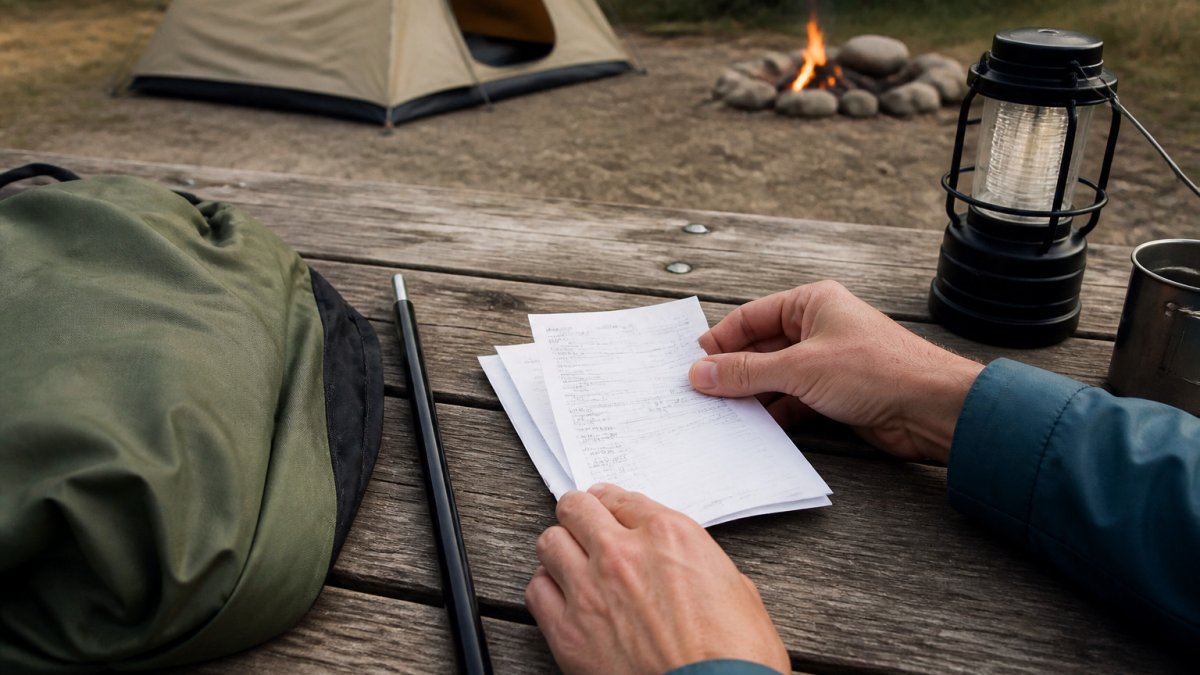
- Take clear photos of the defect, including the product label.
- Write a short description of how and when the problem started.
- Submit the claim through the company's form, email or phone line.
- Keep copies of everything you send and note the date.
Acting quickly matters. Many warranties require you to report a defect within a set period after you notice it.
What to Include in a Camping Gear Warranty Claim Letter
If the company asks for a written claim, a clear letter helps. Include your name, order number, purchase date, product name and model, a description of the defect, the photos you took, and the outcome you want, such as a repair, a replacement or a refund. Keep the tone factual. A claim that is easy to verify moves faster.
How Long a Camping Gear Warranty Claim Takes and When to Escalate
Processing time depends on the company, the product and whether the claim needs inspection. A simple claim with good photos may close in a few days. A claim that requires shipping the item back to the manufacturer can take several weeks.
If you hear nothing within the timeline the company gave you, follow up in writing and reference your original claim number. If the response stalls, ask for a supervisor or check whether the store's return policy covers the situation. Keep your records, since they are your strongest evidence if you need to escalate.
Comparing Warranty Support Across Online Camping Retailers
Comparing retailers on warranty support requires looking past the headline policy and into how coverage changes by gear category and purchase condition. A tent, a sleeping pad, a stove, and a pair of hiking boots often fall under different warranty terms even within the same brand, and retailers handle each category differently.
Use this framework to compare stores side by side:
- Tents and shelters: Manufacturer warranties often cover seam failures and pole defects for a limited period, but not UV degradation or storm damage. Ask whether the retailer will accept a defective tent return after its standard window or defer entirely to the manufacturer.
- Sleeping bags and pads: Defects in zippers and baffles are commonly covered; punctures and normal loft loss are not.
- Footwear: Warranty coverage for delamination and stitching is common, but wear on outsoles is excluded. Retailers vary widely on whether they accept worn footwear returns.
- Stoves and fuel canisters: Defects in valves and seals are usually covered; clogging from use is not.
- Used and clearance items: Coverage may be reduced or void. A clearance item may carry the full manufacturer warranty, a limited retailer warranty, or none. Confirm in writing before you buy.
Claim timelines also differ. A store that handles claims in-house may resolve a simple defect in one to two weeks. A store that forwards claims to the manufacturer may take four to six weeks or longer, especially if the item must ship back for inspection. Ask for a typical timeline and whether the store provides a claim number you can track.
When a claim stalls, escalate in writing. Reference your original claim number, restate the defect and the outcome you want, and ask for a supervisor if the response does not address your question. If the retailer denies the claim, check whether the manufacturer's warranty still applies and file directly with the manufacturer. Keep copies of every message, photo, and receipt, since they are your strongest evidence if you need to escalate further.
Finally, date-check the policy you read. Warranty terms change, and a review from three years ago may describe a policy that no longer exists. Note the date you verified the policy and compare it to the store's current posted terms before you rely on it.
Choosing Gear With Warranty Support You Can Count On
When you shop, favor products with clear warranty terms, check whether the seller supports claims, and keep your proof of purchase. Choose gear from makers and sellers that describe their claim process openly. That is the simplest way to avoid surprises on the trail.
If you are looking for camping gear from a retailer that is upfront about its policies and product details, explore what The Camping Gear Guy offers and compare the warranty information before you order.
Frequently Asked Questions
Do online camping stores handle warranty claims or send you to the manufacturer?
It depends on the retailer and the product. Many online camping stores handle returns and initial defect issues within their own return window, then refer you to the manufacturer for longer warranty coverage. Before buying, check the store's return policy and the manufacturer's warranty terms separately, since a retailer may only process claims during a set period after delivery while the brand's warranty can run for years.
What proof do I need for a camping gear warranty claim?
Most warranty claims require proof of purchase, usually the original order confirmation, invoice or receipt showing the date, the retailer and the product. Keep the original packaging or a photo of the serial number or product label when possible. Photos of the defect, and a short description of how and when it failed, help the claims team confirm a manufacturing defect rather than normal wear and tear.
Can a camping gear warranty cover normal wear and tear?
Generally no. Warranties cover manufacturing defects and material failures under normal use, and they usually exclude normal wear and tear, accidental damage, misuse, improper storage and damage from fire or animals. A tent torn by a branch or a zipper worn down after years of use typically falls outside coverage, while a seam that separates under ordinary pressure is more likely to be honored.
What can I do if a camping gear warranty claim is denied?
Ask the company for the specific reason in writing and compare it against the warranty's exclusion list. If you disagree, reply with your proof of purchase, photos and a clear explanation of the defect, and request a review by a supervisor. If the company still refuses, the retailer's customer service team or the manufacturer's consumer relations department can often escalate the case, and consumer protection agencies accept complaints about unfair warranty handling.