 blog
blog
Best Camping Furniture for Glamping: Comfort Guide
Table of Contents
- What Makes Camping Furniture Glamping-Worthy
- Luxury Camping Chairs That Feel Like Living Room Seating
- Collapsible Glamping Tables for Dining and Lounging
- Portable Camping Storage Solutions That Keep Camp Organized
- Material Quality: Aluminum Alloy vs. Steel Frames
- Interior Design and Space Planning for Tent and Base Camp
- Maintenance, Sustainability, and Long-Term Care
- Frequently Asked Questions
Last Updated: September 13, 2026
What Makes Camping Furniture Glamping-Worthy
Glamping furniture is camping gear engineered to meet the comfort, durability, and visual standards of home furnishings while still folding, packing, and surviving the outdoors. It closes the gap between a bare campsite and an outdoor living space you actually want to spend a weekend in.
The best camping furniture for glamping is judged on two axes: field performance and looks. A chair that packs small but collapses under a 250-pound camper fails the first; a heavy-duty chair that takes ten minutes to assemble fails the second. This guide from The Camping Gear Guy breaks down what separates genuine glamping furniture from ordinary camp gear.
The short answer: prioritize frame stability, weight capacity, and packability first, then let aesthetics decide between options that already pass.
Luxury Camping Chairs That Feel Like Living Room Seating
Luxury camping chairs earn that label through three features: a proper recline system, cushioned seating, and a frame that doesn't wobble when you lean back. Everything else is decoration.
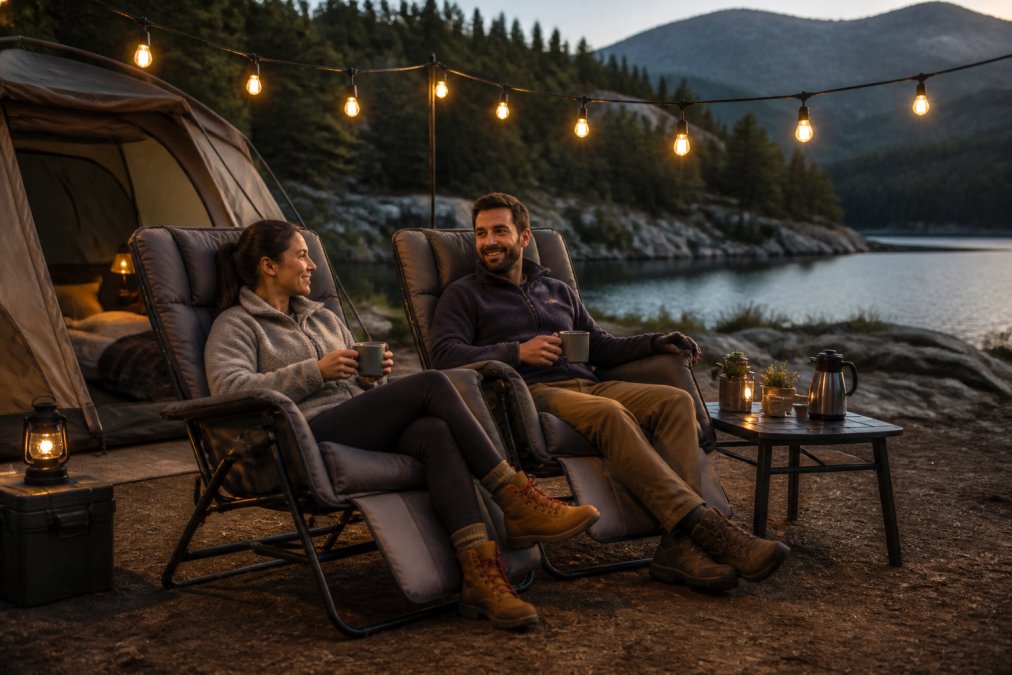
Cushioning and support are separate purchases in disguise: a thick padded seat feels plush in the store but flattens after a few trips if the fabric lacks durable construction. Look for breathable mesh back panels, which reduce the clammy feeling that ruins an afternoon nap.
The four chair archetypes worth knowing
Most glamping chairs fall into four categories, each trading off differently:
- Club-style folding chairs: The classic quad-fold design with a wide seat and a single recline position. Light and cheap, but the seat fabric sags and the frame flexes under heavier campers.
- Zero-gravity recliners: A locking recline mechanism lets the seat and back move together, so your legs lift as the back drops, the closest thing to a living-room recliner at a campsite. The trade-off is bulk: most pack to roughly 38-42 inches long and weigh 18-25 pounds, so they are car-camping furniture, not backpacking gear.
- Director's chairs: An X-frame with a taut fabric seat and back, usually with a side table in one armrest. They sit upright, better for eating than lounging, and flat-fold into a long, narrow sleeve.
- Rocking and glider chairs: A curved base or spring-loaded glider adds motion. Great for reading and settling a kid, but the moving parts wear out first, so hinge quality matters most.
What to check before you buy
- Recline system: Look for a multi-position back rather than a single locked angle. On zero-gravity chairs, test the lock under load, one that slips at 200 pounds will slip worse at 250.
- Weight capacity: Match the rating to your heaviest camper, not the average. Ratings run from 250 pounds on budget chairs to 300-400 pounds on reinforced frames; tubing diameter (often in millimeters) is the real indicator of whether that rating holds (astm.org).
- Seat height: Standard camp chairs sit around 13-16 inches off the ground; "high-back" and "oversized" models often sit at 18-20 inches (rei.com). Higher seats are easier to get out of, which matters for older campers and anyone with knee issues.
- Armrests: Padded, load-bearing armrests double as a cup rest and a handhold. On director's chairs, confirm the armrest is rated for the same weight as the seat, since that is where people push off.
- Fabric: Look for 600D or heavier polyester or Oxford weave with a UV-resistant coating. Thinner 300D fabric is fine for occasional use but fades and tears faster under constant sun.
- Frame: Powder-coated steel is the budget standard; aluminum alloy costs more but resists rust and cuts weight by roughly a third. Check the welds at the leg joints, that is where cheap frames fail first.
The weight-to-comfort ratio for car camping
For car camping and base camp setups, a heavier chair with a wider seat is almost always the better trade, you are not carrying it far, so the weight-to-comfort ratio tilts toward comfort. A 20-pound zero-gravity recliner ten feet from the trunk delivers more usable comfort than a 4-pound ultralight chair that leaves your shoulders sore after an hour.
The middle ground most guides skip is luxury car camping: chairs in the 10-15 pound range with a real recline, a 300-pound capacity, and a packed size that fits a sedan trunk, where most glamping setups actually live.
Matching chairs to your table and tent
A chair is only comfortable in context: a low-slung lounger paired with a standard-height dining table forces you to eat with your plate at chest level. Decide whether your chairs are for lounging, dining, or both, and pick a seat height that matches your table.
Collapsible Glamping Tables for Dining and Lounging
Collapsible glamping tables solve the problem chairs create: once you have comfortable seating, you need a surface at the right height to eat, set down a drink, or hold a lantern. The right table is stable, weather-resistant, and packs flat enough to slide into a vehicle.
Height is the decision most buyers get wrong. A low table suits lounging and pairs with low chairs; a standard-height table works with full-size seating and doubles as a food prep surface. If your group mixes both, a modular design with adjustable legs covers more situations.
Setup time is the other practical spec: tables with folding legs and locking hinges go up in under a minute, while tables requiring assembly with separate parts tend to stay in the vehicle. For families, a wipe-clean top with a raised edge handles spilled drinks far better than a flat surface.
Portable Camping Storage Solutions That Keep Camp Organized
Portable camping storage solutions are the difference between a campsite that functions and one where you spend twenty minutes hunting for the matches. The goal: a place for everything, sized to your vehicle and tent interior.
Think in layers: soft-sided bins with reinforced handles for clothing and bedding, collapsible crates for food and cookware, and a hanging organizer inside the tent to keep small items off the damp ground.
- Label by category: kitchen, clothing, bedding, tools, and first aid
- Choose stackable shapes: square bins use vehicle space far better than round ones
- Favor collapsible designs: they reclaim storage space on the drive home
- Keep one clear bin for wet gear: it stops moisture from spreading to dry items
A common mistake is buying storage before measuring the vehicle. Measure your cargo area first, then buy bins that fit the space in two layers rather than one.
Material Quality: Aluminum Alloy vs. Steel Frames
Aluminum alloy frames win on weight; steel frames win on cost and, in some designs, stability. Which you want depends on whether you carry the furniture or park next to it.
Aluminum alloy resists rust and cuts weight substantially, which is why it dominates packable gear; the trade-off is price and, at the low end, more flex under heavy loads. Steel is heavier and needs more moisture care, but feels more planted and costs less.
| Frame Material | Weight | Rust Resistance | Best For |
|---|---|---|---|
| Aluminum alloy | Light | High | Car camping, portability, frequent setup |
| Steel | Heavy | Moderate | Base camp, long stays, budget builds |
| Powder-coated steel | Heavy | Good | All-weather use with regular care |
How the frame actually fails
Frame failures almost never happen mid-tube, they happen at the joints: the welds where legs meet the seat frame, and the hinge points on folding mechanisms. Aluminum chairs usually fail via a cracked weld or bent hinge pin; steel fails when rust creeps into a weld and weakens it from inside. That is why a cheap aluminum chair can outlast an expensive steel one if the welds are better and the steel one is stored damp.
A practical check: look at the tube diameter and wall thickness. A 22mm tube with a 1.2mm wall is sturdier than a 25mm tube with a 0.8mm wall, even though the second one looks beefier. If a listing does not publish wall thickness, treat the weight capacity as a marketing number rather than an engineering one.
Fabric durability matters just as much as the frame
The frame gets the attention, but the fabric is what you sit on and usually the first thing to fail. Look for UV protection in the weave and reinforced stitching where the seat meets the frame.
- Denier (D): 600D polyester is the common standard for camping furniture (peer-reviewed research). 300D is lighter and cheaper but tears and fades faster. 900D and above is heavier and more abrasion-resistant, common on premium glamping chairs.
- Coating: PU (polyurethane) and PVC coatings add water resistance. PU is lighter and more breathable; PVC is more waterproof but heavier and can crack in cold weather.
- UV treatment: Without it, fabric fades and weakens within a season or two of regular sun exposure. Look for "UV-resistant" or "solution-dyed" fabric, which holds color longer than surface-dyed fabric.
- Stitching: Bar-tacked or double-stitched seams at the seat-to-frame connection are the difference between a chair that lasts five seasons and one that lasts one.
Weather resistance in practice
No camping furniture is fully weatherproof, but materials handle exposure differently. Aluminum frames tolerate rain and humidity far better than steel, which is why coastal campers favor aluminum despite the price premium. Powder-coated steel resists rust until the coating chips, then rust starts at the exposed spot. In humid climates or near salt water, plan on touching up chips with matching enamel.
Fabric is the bigger concern. Even UV-treated fabric degrades faster when it stays wet, because moisture plus sun accelerates breakdown. The single most effective habit is drying everything fully before storage.
Sustainability and repairability
On sustainability, the most effective choice is buying once and maintaining well: look for recycled fabrics or repairable frames, and favor brands that publish material specs. Repairability is the practical side, frames with replaceable hinge pins, removable fabric covers, and standard bolt sizes can be fixed instead of replaced. Before buying, check whether the manufacturer sells replacement parts; a chair with a $15 replacement hinge beats one you throw out when a single pin bends.
Interior Design and Space Planning for Tent and Base Camp
Treating your campsite like an outdoor living space changes how you lay it out. The most comfortable setups follow small-room logic: define zones, keep walking paths clear, and place furniture to frame a view rather than block it.
Plan before you unpack: sleeping at the back of the tent, seating in a loose circle or L-shape facing the fire or view, the table within reach of every chair rather than in the traffic path, and storage lining the edges where it doubles as a windbreak.
Aesthetics matter too: matching chair and table finishes, or a consistent color family, makes a campsite read as intentional rather than improvised. String lights and a single rug do more for the look than another piece of furniture.
Maintenance, Sustainability, and Long-Term Care
Longevity comes down to three habits: dry everything before storage, clean fabric before stains set, and inspect frames and hinges each season. Furniture that gets this care routinely outlasts gear replaced every couple of years.
Drying is the one people skip. Folded furniture stored damp grows mildew and corrodes steel joints, usually permanent problems. Set everything up in the sun for an hour after a wet trip before it goes back in the bag.
- Wipe frames with a dry cloth after every trip
- Spot-clean fabric with mild soap, never harsh solvents
- Check hinge bolts and tighten as needed
- Store in a dry, ventilated space, never a sealed damp bag
The challenge with glamping furniture is that comfort and durability pull in opposite directions, and cheap gear forces you to pick one. The Camping Gear Guy offers a wide selection of high-quality camping and outdoor equipment, including comfortable sleeping supplies and essential survival tools, all at affordable prices. Our fast, user-friendly online shopping experience and customer-oriented approach ensure you receive reliable products and exceptional service, making it easy to prepare for your next outdoor journey. Shop now with The Camping Gear Guy.
Frequently Asked Questions
What is the best camping furniture for long-term comfort?
Look for chairs with high weight capacity, cushioned seating, and a proper recline system. Aluminum alloy frames keep weight down while staying strong. Breathable mesh fabric helps in warm weather, and ergonomic back support matters for long sits. For tables, adjustable height and a stable load-bearing surface make a difference. The Camping Gear Guy lists real weight specs and capacity ratings so you can compare before buying.
How do I choose furniture that is both stylish and collapsible?
Start with packability. Measure your vehicle space and tent interior before shopping. Collapsible glamping tables and folding chairs with compact storage bags travel well without sacrificing looks. Check setup time: most quality pieces assemble in under two minutes. Materials like powder-coated aluminum and weather-resistant fabric hold up over seasons. Prioritize pieces that match your outdoor living space aesthetic and fold flat for transport.
What camping furniture is most durable?
Durability comes down to frame construction and fabric. Aluminum alloy resists rust better than steel and weighs less. Stainless steel hardware holds up in wet conditions. Look for UV protection on fabrics and reinforced stitching at stress points. Heavy-duty weight capacity ratings above 300 pounds signal stronger build quality. Weather-resistant materials and breathable mesh extend lifespan. Store gear dry and clean frames after each trip to prevent corrosion.
How to make camping feel like glamping?
Upgrade three areas: seating, dining, and storage. Swap basic camp chairs for luxury camping chairs with cushioning and back support. Add a collapsible glamping table for meals and games. Use portable camping storage solutions to keep the tent interior tidy. String lights, a rug, and modular design pieces turn a campsite into an outdoor lounge. The goal is campsite comfort without hauling furniture that takes an hour to set up.