 blog
blog
Best Camping Gear for Families 2026: Top Picks
Table of Contents
- Best Family Camping Gear for 2026: What Actually Holds Up
- Best Family Camping Tents for 2026
- Sleeping Bags and Pads for Every Family Member
- Camp Kitchen and Cooking Essentials
- Camping Gear for Toddlers: What to Pack
- Family Camping Packing Checklist 2026
- Gear Storage Solutions for Small Vehicles
- How to Maintain and Repair Your Family Camping Gear
- Why Buying Family Camping Gear From The Camping Gear Guy Works
- Frequently Asked Questions
Last Updated: September 11, 2026
Best Family Camping Gear for 2026: What Actually Holds Up
Finding the best camping gear for families 2026 comes down to three things: sleeping systems that fit everyone, a shelter that survives real weather, and storage that keeps chaos contained.
Camping gear is the collection of equipment a family needs to sleep, eat, stay warm, and stay safe outdoors. The right setup depends less on brand names and more on matching specifications to your family size, vehicle space, and trip length.
A common mistake is buying everything at once. Start with shelter and sleep, then add kitchen and comfort items as you learn what your family actually uses.
Leave No Trace Seven Principles
Below, we'll walk through every category that matters, from tents to toddler gear, plus the storage and repair advice most guides skip.
Best Family Camping Tents for 2026
The best family camping tents prioritize interior height, a full-coverage rainfly, and a footprint that matches your family size. Look for a weather rating and taped seams, not just a "waterproof" label.
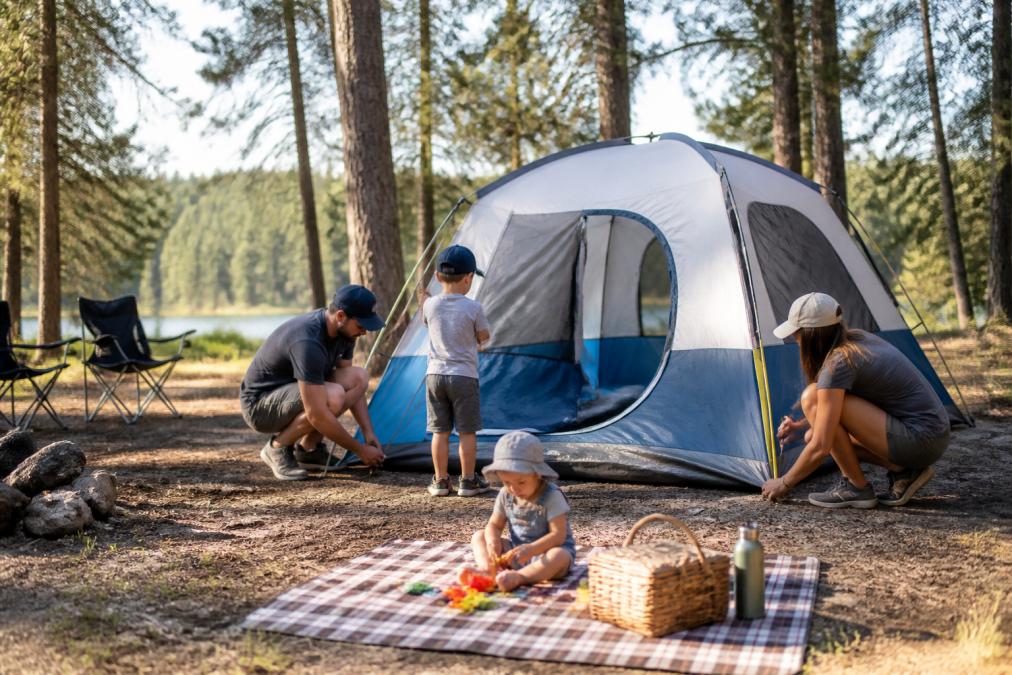
For four people, a six-person tent gives everyone breathing room plus space for bags. Read the fine print: many tents are rated at their absolute maximum capacity, which means no floor space left for gear.
Key specs to check before buying:
- Peak height (aim for 6 feet or more for adults)
- Rainfly coverage (full-coverage beats partial)
- Packed size and weight for your vehicle
- Number of doors (two doors reduce middle-of-the-night climbing)
Sleeping Bags and Pads for Every Family Member
Sleeping bags and pads are where families overspend on the wrong thing. Temperature rating matters more than fill type for casual campers.
Match the bag's temperature rating to your coldest expected night, then subtract about 10 degrees for safety margin. Kids sleep colder than adults, so size up their rating.
Pads deserve equal attention. A sleeping pad R-value measures how well it resists heat loss; higher numbers mean warmer nights. For three-season family camping, an R-value around 3 to 4 works well. Pair a closed-cell foam pad under an inflatable one for insulation and puncture protection.
| Camper | Bag Rating | Pad R-Value | Why |
|---|---|---|---|
| Adults | 20-30°F | 3-4 | Standard three-season comfort |
| Teens | 20-30°F | 3-4 | Similar needs to adults |
| Toddlers | 20-35°F | 4+ | Sleep colder, need more insulation |
| Infants | 35-40°F | 4+ | Supervised sleep only, warmer rated |
Camp Kitchen and Cooking Essentials
A camp kitchen works best when it's simple, organized, and packed by function rather than by item. Two-burner camp stoves handle family meals without the fuss of open-fire cooking.
Bring one cookware set with nesting pots, a multi-tool, and a dedicated stuff sack for utensils. A small folding table keeps prep off the ground and doubles as a dish station.
For food storage, use bear-resistant containers where required and check local regulations before every trip. Campsite organization starts with a clear "kitchen zone" separate from sleeping areas.
Camping Gear for Toddlers: What to Pack
Camping gear for toddlers is less about gadgets and more about familiar comfort items plus safety. Toddler-friendly gear means small sleeping bags, easy-on layers, and a safe place to play.
Pack a toddler sleeping bag rated warmer than you'd expect, a portable cot or pad, and a few familiar toys or a lovey. Sensory-friendly setups help neurodivergent children: bring noise-reducing headphones, a weighted blanket if they use one at home, and a predictable bedtime routine.
- Moisture-wicking base layers and quick-dry spares
- A headlamp or small LED lantern they can operate
- Sun protection and a wide-brim hat
- A comfort item from home
Family Camping Packing Checklist 2026
A family camping packing checklist 2026 should be built around your shelter system, sleep system, and kitchen, then filled in with clothing, safety, and hygiene. The difference between a checklist that works and one that gets ignored is quantities: most families pack the right categories and the wrong counts. Print this, write your own numbers in the margins, and reuse it every trip.
How to size the list. Use three multipliers: people, nights, and weather. A two-night trip for four in mild weather needs roughly half the clothing of a four-night trip in wet weather, but the same shelter and sleep kit. Build the core list once, then adjust only the consumables (food, fuel, batteries, sunscreen) per trip.
Shelter and sleep (per family, not per person)
- Tent sized one person above your headcount
- Footprint or ground cloth cut to the tent's exact dimensions
- Stakes and guylines: bring 4-6 spares, they vanish in tall grass
- Sleeping bags: one per camper, rated 10°F below your expected low
- Sleeping pads: one per camper, R-value 3-4 for three-season
- Pillows or stuff-sack pillowcases (one per camper)
- Repair kit: seam sealer, patch kit, spare pole splint
Kitchen (per family)
- Two-burner camp stove plus one spare fuel canister per two days of cooking
- Nesting cookware set, one multi-tool, one dedicated utensil stuff sack
- Plates, bowls, and cups: one per camper plus one spare each
- Dish bin, biodegradable soap, scrubber, two trash bags (one for trash, one for wet gear)
- Folding prep table and a water container sized to your family (plan on roughly a gallon per person per day for drinking and cooking)
Clothing (per person, per trip)
- Base layers: two sets, moisture-wicking
- Insulating midlayer: one
- Waterproof shell: one
- Socks: one pair per day plus two spare pairs
- Camp shoes and one pair of dry shoes kept in the vehicle
- Wide-brim hat and sunglasses for each camper
Safety and hygiene (per family)
- First aid kit with blister care, tweezers, and children's fever reducer
- Personal medications in a labeled, waterproof bag
- Sunscreen and insect repellent
- Hand sanitizer, toiletries, trowel, and toilet paper in a sealed bag
- Emergency contact card and a printed copy of your campsite reservation
Lighting and power (per family)
- One LED lantern for the main area
- One headlamp per camper old enough to wear one
- Extra batteries in the size your devices actually use
- Portable power bank and charging cables
The two-bin system. Pack one bin for the gear you need on arrival, tent, stakes, footprint, sleeping bags, headlamps, and a second for everything else. Keep the arrival bin on top in the vehicle so you are not unpacking the whole car at dusk. Label a third bin for dirty or wet gear so it never touches dry clothing.
Trip-length modifiers
- One night: skip the dish bin, use one-pot meals, and bring half the clothing
- Two to three nights: the full list above
- Four or more nights: add a laundry bag, a second fuel canister, and a mid-trip resupply plan for ice and fresh food
Weather modifiers
- Rain: add a tarp, extra guylines, and a dry bag for each camper's spare clothes
- Cold: add one extra insulation layer per camper and a warmer bag rating
- Heat: add a shade tarp, extra water, and electrolyte packets
Keep the list in a document you can edit. The families who camp most often are not the ones with the most gear, they are the ones whose list has been trimmed by every trip they have taken.
Gear Storage Solutions for Small Vehicles
Storage solutions for small vehicles come down to vertical packing and soft-sided containers, but the real constraint most guides skip is payload and visibility, not volume. A compact hatchback, a sedan, and a minivan each fail in a different way, and the fix is different for each.
Start with the numbers, not the gear. Check your vehicle's payload rating on the driver's door jamb sticker, that is the total weight of passengers plus cargo the vehicle is designed to carry. A family of four plus a full camping load can approach that number faster than most people expect, especially in smaller crossovers. Keep heavy items low and forward, and never stack gear above the seatbacks where it can become a projectile in a sudden stop. Follow the cargo loading guidance published by the National Highway Traffic Safety Administration.
NHTSA cargo loading safety guidance
Sedan or compact hatchback
- Trunk floor: hard-sided bins for kitchen and dry goods, packed flat
- Back seat: one child, one soft duffel, one cooler, never stack above the window line
- Footwells: sleeping pads and rolled bags, which conform to odd shapes
- Roof: a soft roof bag on a pad, strapped through the door frames, adds capacity without a permanent rack
Small SUV or crossover
- Cargo area: vertical soft duffels standing on end, not stacked flat
- Under the cargo floor: tools, stakes, and the repair kit in the spare-tire well
- Rear seat backs: hang a seat-back organizer for headlamps, sunscreen, and snacks
- Hitch: a hitch-mounted cargo carrier keeps wet or bulky gear outside the cabin
Minivan or three-row SUV
- Third row folded: the largest single gain in family camping capacity
- Behind the second row: a cargo net to keep bins from sliding forward
- Roof rack: hard cargo box for bulky light items like sleeping bags and pads
The three-bag rule. For any vehicle, pack three categories separately: a soft duffel for clothing, a hard bin for kitchen, and a soft bag for shelter. Soft bags fill the gaps around hard bins; hard bins protect what breaks. This single habit recovers more usable space than any rack or organizer you can buy.
What actually wastes space
- Hard coolers that do not fit under a seat or in a footwell
- Rigid plastic bins in odd sizes that leave dead air around them
- Gear stored in its retail packaging
- Duplicate items, two stoves, three lanterns, four folding chairs for four people
The first-night bag. Pack one small bag with the tent, stakes, footprint, headlamps, and pajamas. It goes on top and comes out first. Everything else can wait until morning.
Roof bag caveats. A soft roof bag is the cheapest capacity gain for a small vehicle, but it changes your center of gravity and adds wind noise and drag. Keep it under the manufacturer's weight limit, strap it to the roof or through the door frames as directed, and never put heavy or sharp items in it. Recheck the straps after the first 30 minutes of driving.
Wet gear discipline. One collapsible bin or mesh bag for wet and dirty items keeps moisture out of the cabin and out of your dry clothing. On a small vehicle, that bin lives on the roof or the hitch carrier, not inside.
How to Maintain and Repair Your Family Camping Gear
Gear maintenance extends the life of everything you own and keeps it out of landfills. A little care after each trip prevents most failures.
Clean and fully dry your tent before storing it; mildew destroys waterproof coatings faster than wear. Reapply seam sealer as needed. Patch sleeping pads with the included repair kit, and store bags loosely rather than compressed.
For eco-friendly disposal, repair before replacing. Many outdoor retailers and manufacturers run repair programs, and local gear swaps keep usable equipment in circulation.
Why Buying Family Camping Gear From The Camping Gear Guy Works
The best camping gear for families 2026 is the gear that fits your family, your vehicle, and your budget, and that you can actually maintain. Get the shelter and sleep systems right first, then build out kitchen, lighting, and comfort as you go.
Our fast, user-friendly online shopping experience makes it easy to find affordable, high-quality gear without getting lost in endless listings, and our customer-oriented team is here to answer questions before and after you buy.
Shop Now with The Camping Gear Guy and get your family outfitted for the next trip with gear built to last.
Frequently Asked Questions
What are the must-have camping gear items for families in 2026?
Start with a weather-rated family tent, sleeping bags rated for your expected lows, and insulated sleeping pads. Add a camp stove, cookware set, LED lanterns, headlamps, a first aid kit, and a multi-tool. For families, pack a ground cloth or footprint to protect the tent floor, plus a dedicated bin for toddler-friendly snacks and activities. A family camping packing checklist 2026 helps you avoid forgetting essentials like sunscreen, bug spray, and extra layers.
How do I choose the best family camping tents for my crew?
Match tent capacity to your family size plus gear. A four-person tent works for two adults and two small kids, but a six-person model gives more room for cots or air mattresses. Look for a waterproof rating of at least 2,000mm, taped seams, and a full-coverage rainfly. Check the peak height so adults can stand. If you camp in wind or rain, prioritize a sturdy pole structure over ultralight weight.
What camping gear for toddlers should I prioritize?
Toddlers need their own sleeping bag or a wearable blanket, a familiar lovey, and a pad with an R-value of 2 or higher to stay warm. Pack easy-on layers, moisture-wicking base layers, and a small headlamp or glow stick for comfort at night. A portable potty or training seat helps with hygiene. Bring a few quiet toys and a toddler carrier for hikes. Always test new gear at home before the trip.
How can I organize camping gear for a small car?
Use soft-sided duffels that compress into odd spaces, and pack sleeping bags in stuff sacks to save room. A roof cargo box or hitch rack frees up interior space. Assign each family member a labeled bin for personal items. Keep a camp kitchen tote with cookware and utensils ready to go. For tents and chairs, look for compact models that pack down small. A family camping packing checklist 2026 can help you prioritize what fits.
Outfitting a family for camping can feel overwhelming, especially when gear fails after one season. The Camping Gear Guy carries high-quality camping and outdoor equipment at affordable prices, backed by years of industry experience and a customer service-oriented approach that helps beginners and veterans alike. Browse our selection, ask us anything, and get started with The Camping Gear Guy to build a family setup you can trust trip after trip.